
Many customers left inquiries after reading the first article: after fixing existing caster noise issues, how to pick inherently quiet wheels to avoid recurring noise? What wheel material delivers the quietest rolling performance for different working environments? How to maintain casters long-term to keep them silent for years?
Based on decades of after-sales and on-site engineering experience, CMCL Casters launches this exclusive sequel guide, focusing on low-noise wheel material comparison, industry-specific silent caster matching rules, and standardized maintenance plans to permanently cut down caster noise for your mobile equipment.
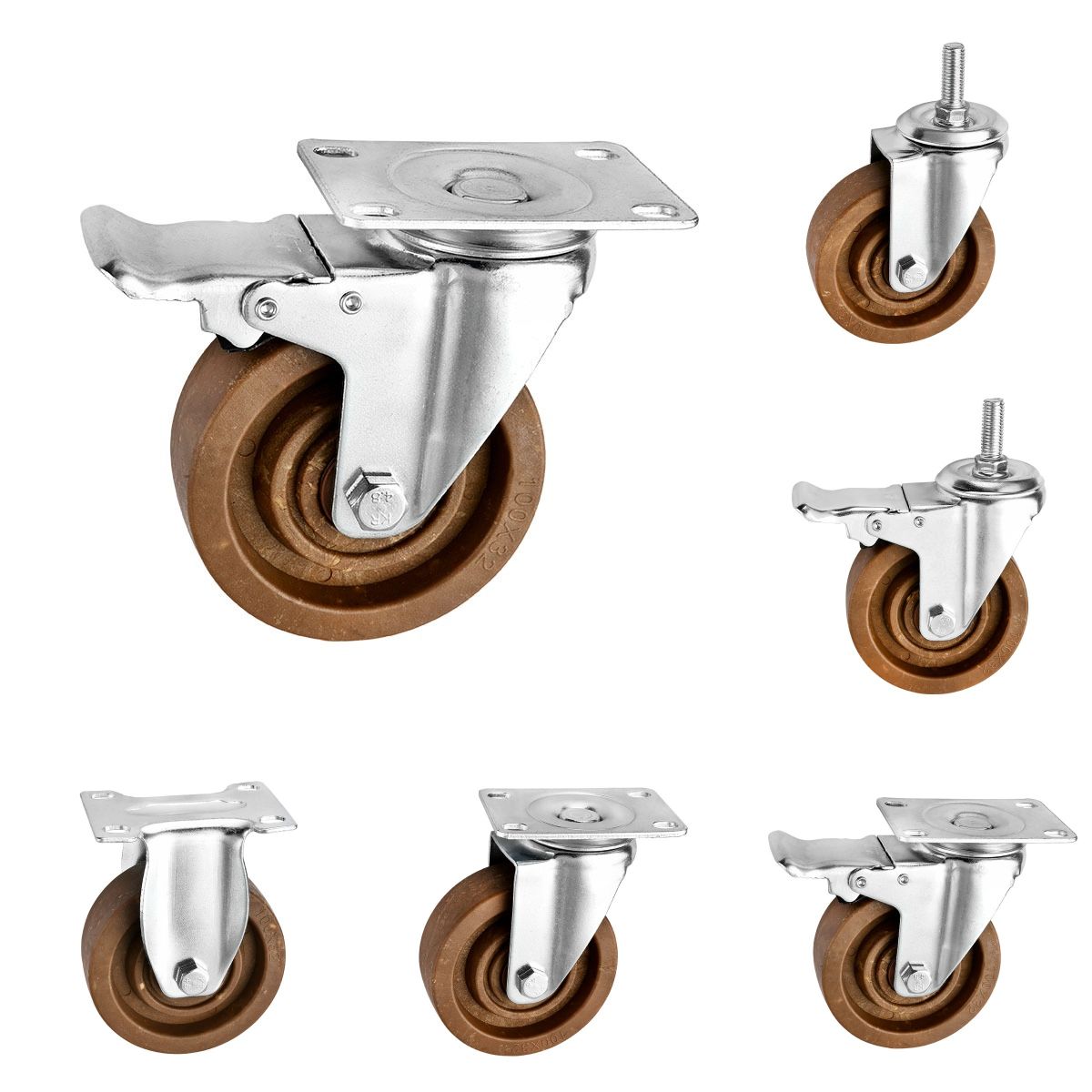
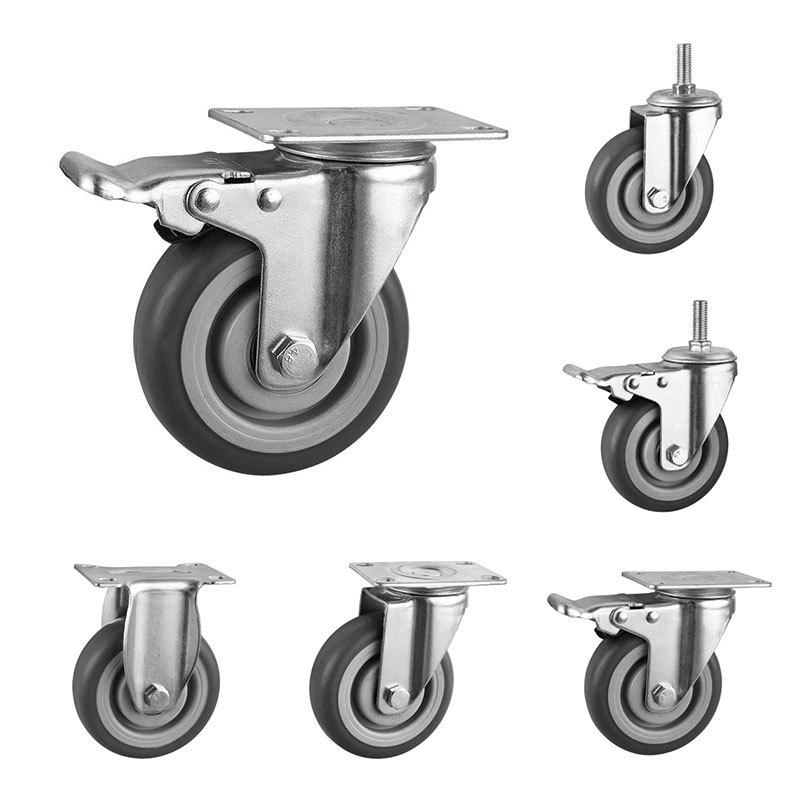
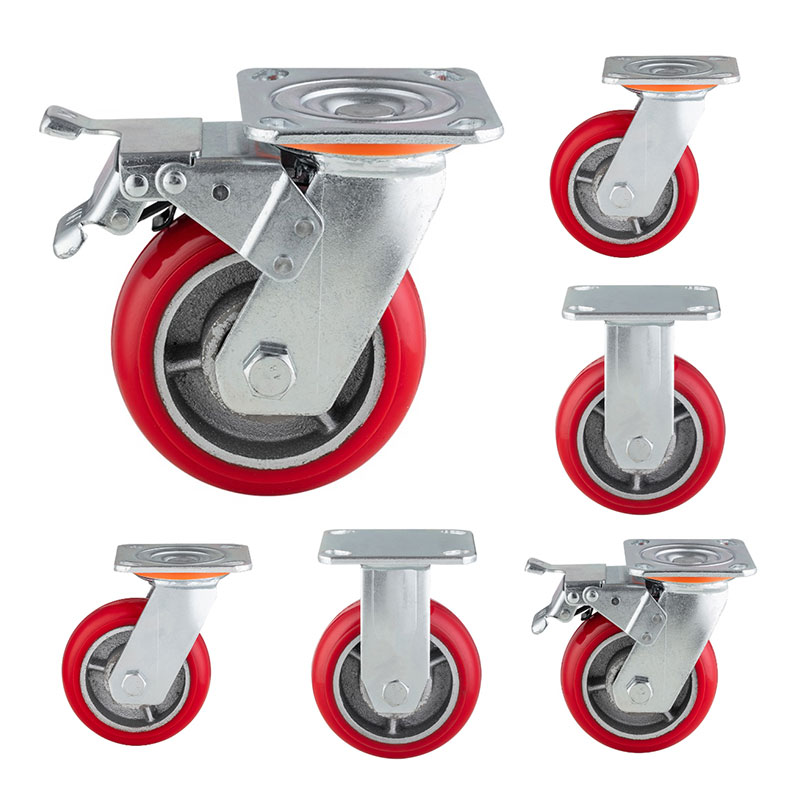
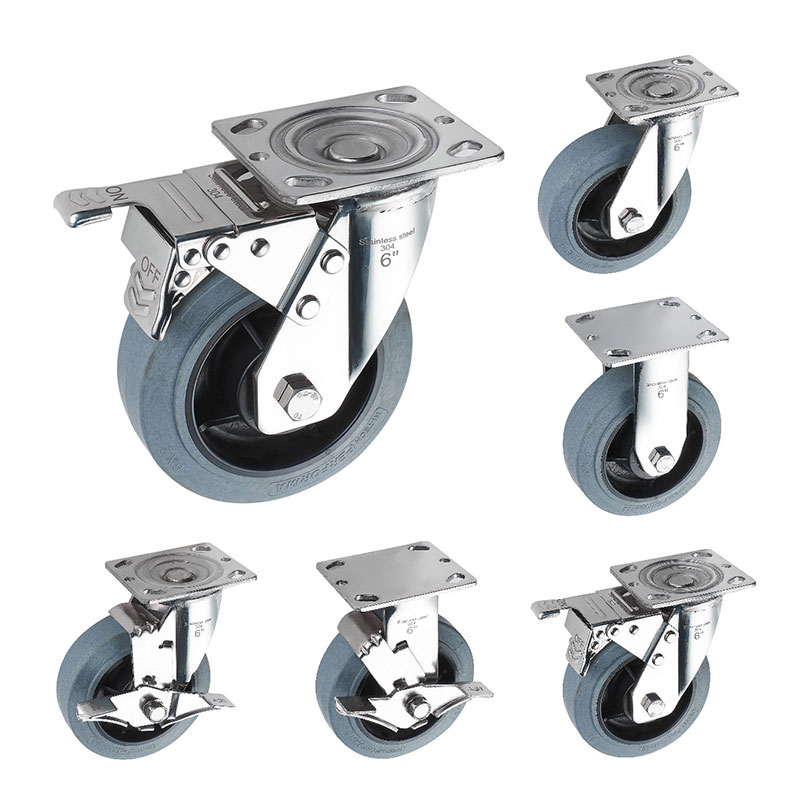
Wheel material is the decisive factor for inherent caster noise. Hard rigid wheels produce loud vibration and friction noise on concrete, epoxy and tile floors, while elastic polymer wheels absorb vibration to deliver whisper-quiet movement. Below is our engineer-ranked noise level comparison for mainstream wheel types:
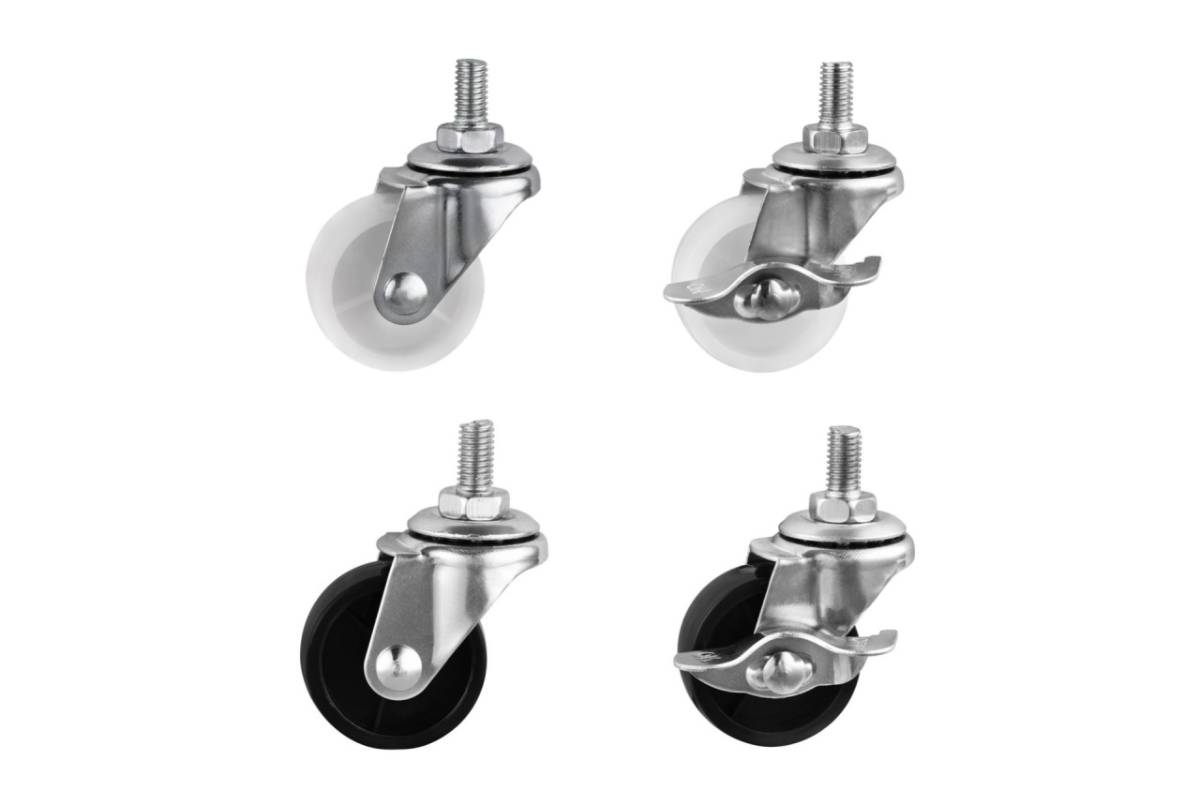
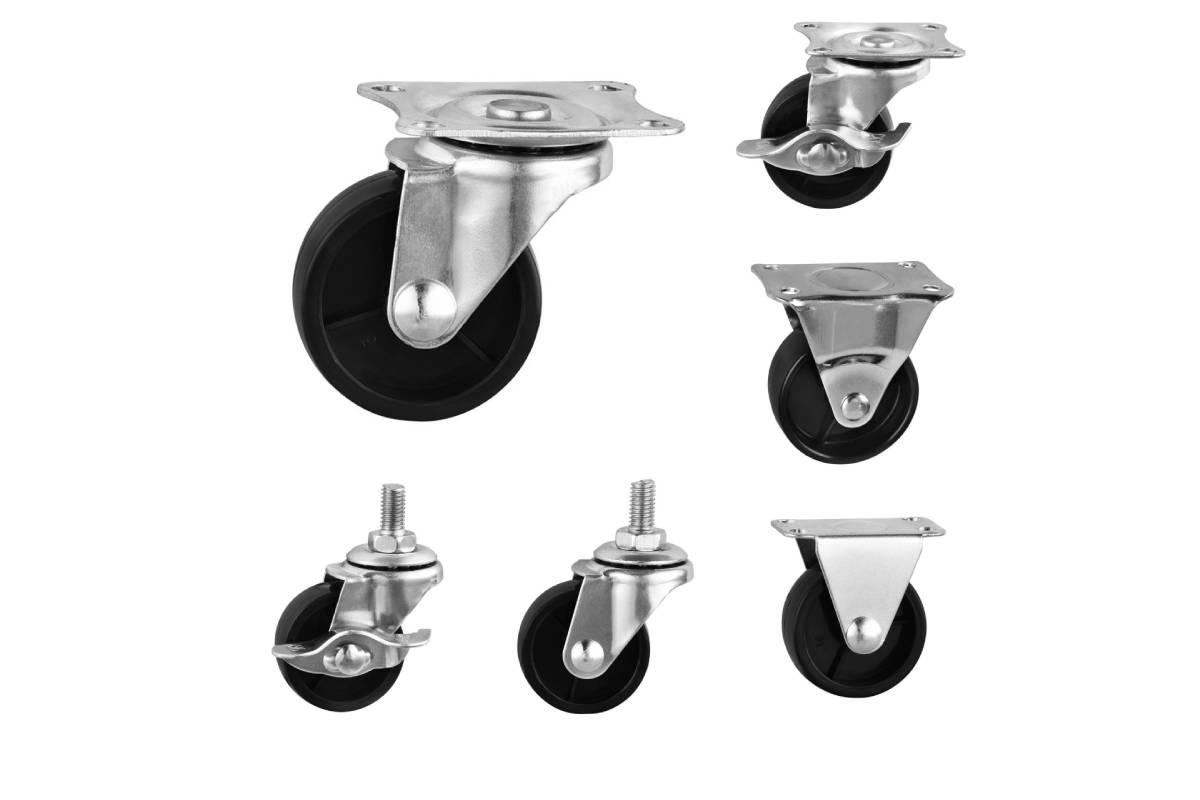
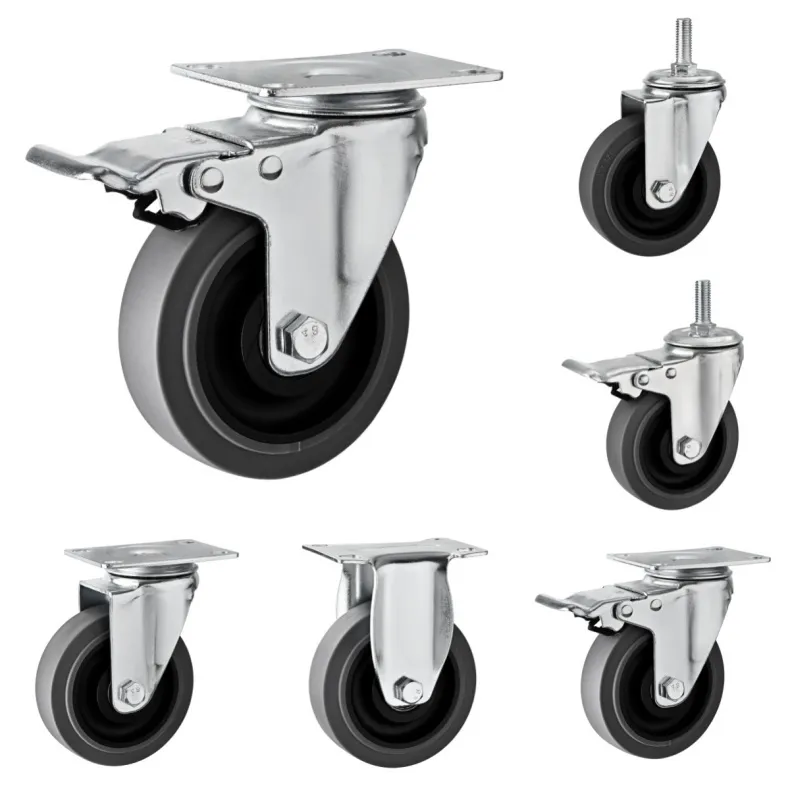
Noise performance: Lowest noise, excellent shock absorption Core advantages: Soft elastic tread eliminates floor impact vibration, barely produces squeaks even on polished smooth floors, protects floor coatings and tiles from scratches. Best applicable industries: Hospital medical trolleys, office furniture casters, hotel service carts, retail display racks, school facility carts. Limitation: Slightly weaker load capacity and abrasion resistance than PU wheels, not recommended for heavy-duty warehouse frequent transportation.
Noise performance: Near-silent, softer rolling than PU wheels Core advantages: Combines the quietness of rubber and the wear resistance of polyurethane, non-marking design leaves no black streaks on bright floors, flexible at room temperature without hardening. Best applicable industries: Medical equipment, cleanroom transport carts, supermarket trolleys, laboratory mobile racks.
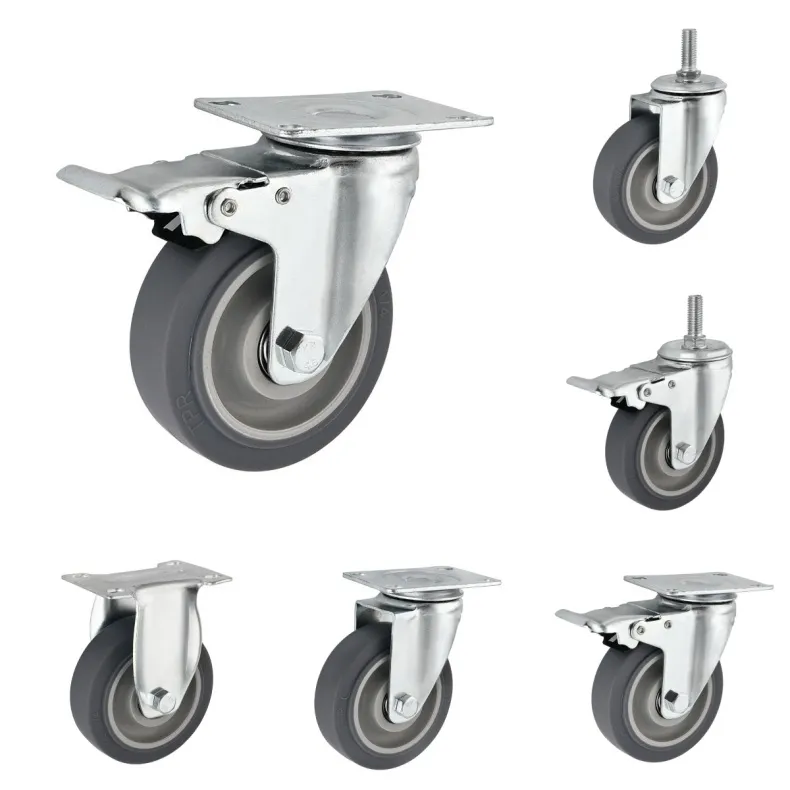
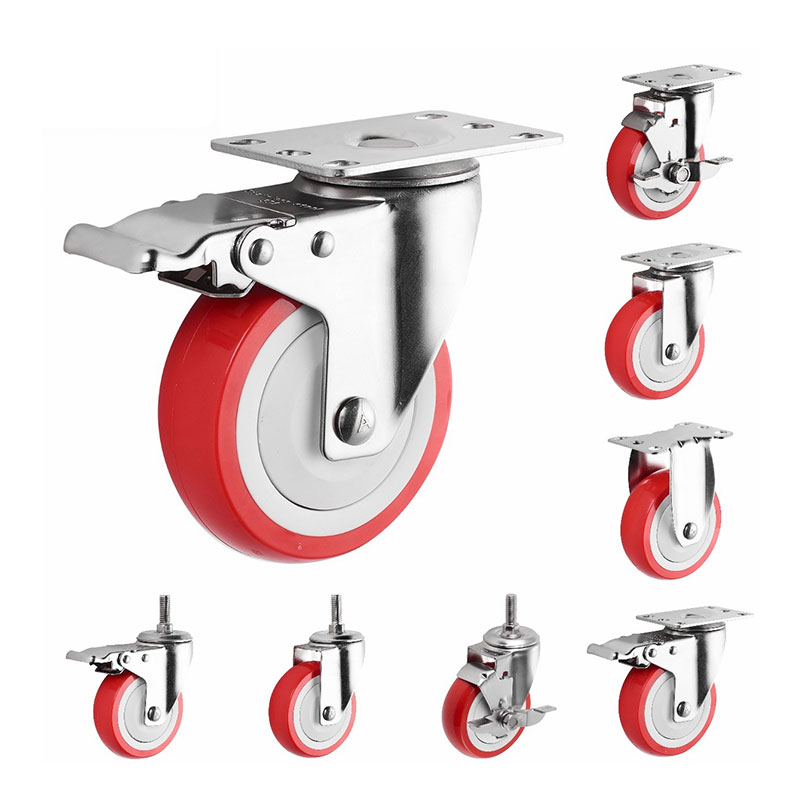
Noise performance: Moderate low noise, ideal balance of quietness and durability Core advantages: Perfect integration of silent rolling, heavy load bearing, abrasion resistance and floor protection; stable performance under long-term frequent pushing without tread deformation. Best applicable industries: General warehouse logistics carts, light & medium industrial handling equipment, food factory mobile racks, commercial transport trolleys. CMCL’s standard PU silent casters are the most widely selected model by our global clients for daily low-noise material handling.
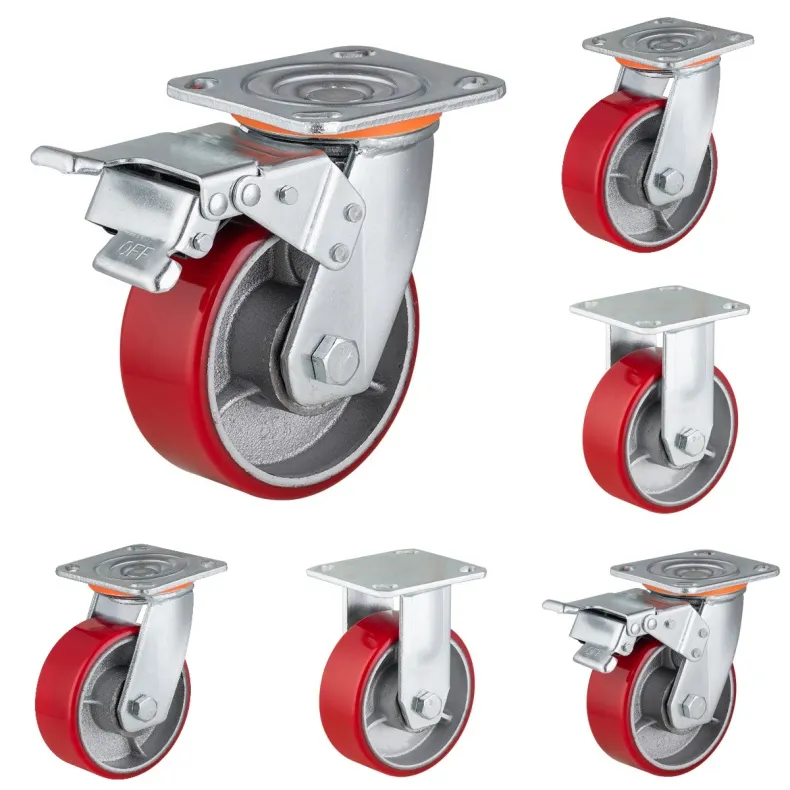
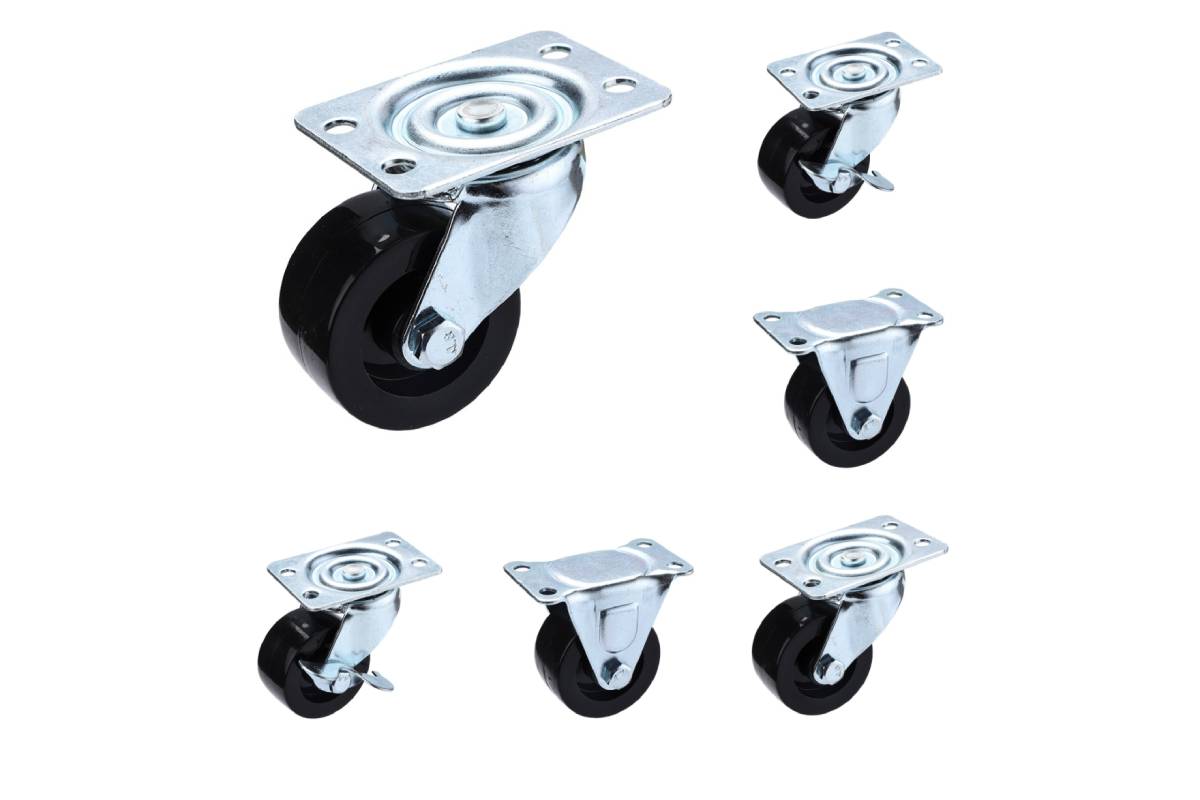
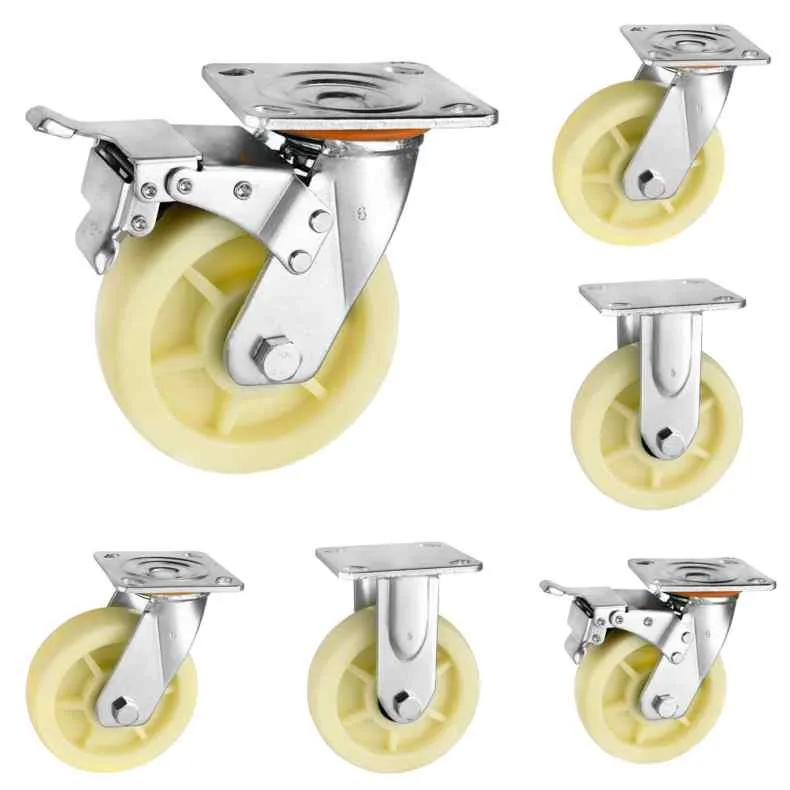
Noise performance: Obvious clicking and grinding noise on hard indoor floors Core advantages: Super wear-resistant, impact-proof, resistant to oil and chemical corrosion, supports heavy loads at low cost. Applicable limitation: Only recommended for rough outdoor ground, rough unfinished concrete workshops; avoid indoor office, medical and cleanroom environments where noise control is required.
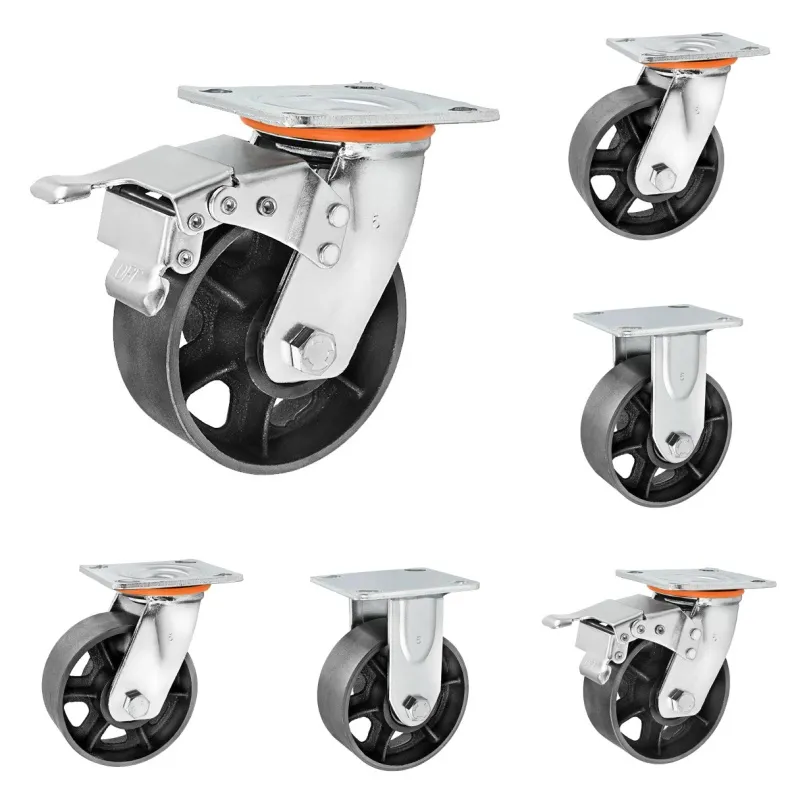
Noise performance: Loudest rolling noise, severe metal vibration on hard floors Core advantages: Ultra-heavy load capacity, high temperature resistance, long service life under extreme heavy impact. Applicable limitation: Only for heavy machinery transport, outdoor rough yard movement; never use in noise-sensitive indoor working areas.
Noise reduction cannot rely solely on wheel material alone. Working temperature, static control, hygiene standards and load weight must be combined to select complete silent caster assemblies (wheel + bracket + bearing). CMCL engineers summarized matched silent caster solutions for mainstream industrial scenarios:
Priority picks: Rubber casters, TPR silent casters with sealed silent bearings Extra demand: Stainless steel corrosion-resistant brackets for frequent water washing and disinfection
Priority picks: Medium-duty PU silent casters, heavy-duty PU casters with double sealed bearings Extra demand: Wear-resistant tread to withstand long-distance repeated transport
Priority picks: Anti Static ESD silent PU / TPR casters Extra demand: Continuous static dissipation function to protect precision electronic components while maintaining quiet rolling
Priority picks: Stainless steel silent PU / TPR casters with fully sealed anti-corrosion bearings Extra demand: Resist cleaning detergents, acid and alkali liquid erosion without stuck rolling or abnormal noise
Temporary lubrication and debris cleaning only solve short-term noise issues. Forming fixed maintenance cycles can prevent noise recurrence and extend caster service life by 60% according to CMCL field test data. We split maintenance standards by equipment usage frequency:
A.Light-use scenarios (office, medical carts, used less than 2 hours daily): Full inspection & maintenance every 3–6 months
B.Medium-use scenarios (warehouse logistics, food processing, used 4–8 hours daily): Inspection & maintenance every 2 months
C.Heavy-use scenarios (factory continuous production, round-the-clock transport): Inspection & maintenance every 1 month
Clean wrapped hair, fabric threads, dust, metal shavings and sand around wheel axles, wheel forks and bearing housings every maintenance cycle. Foreign entanglement is the top recurring noise cause for medical and office casters.
Apply high-performance lithium grease to 4 critical positions: wheel internal bearings, central axles, swivel raceways and bracket pivot points. Sealed bearing casters only need supplementary lubrication during disassembly inspection; open bearing casters require regular grease replenishment to avoid dry grinding squeaks.
Tighten all mounting bolts, axle nuts and retaining washers; replace deformed brackets, worn mounting holes and missing spacers. Tiny gaps from loose hardware create constant rattling noise during pushing and turning.
Check wheel surfaces for flat spots, cracks, uneven wear and aging hardening. Replace aged, deformed wheels in advance instead of waiting for loud bumping vibration to appear.
The first troubleshooting guide taught you how to locate and fix existing caster noise problems; this sequel shares proactive silent wheel selection rules and standardized long-term maintenance plans to fundamentally avoid noisy casters.
The quietest caster solution always follows two rules: select low-noise elastic wheel materials matching your floor and industry, and stick to regular targeted maintenance of bearings, hardware and wheel treads.
As a professional custom industrial caster manufacturer, CMCL Casters supplies a full range of low-noise mobility products: rubber silent casters, TPR non-marking casters, PU industrial quiet casters, stainless steel medical silent casters, ESD anti-static low-noise casters.
If you struggle with persistent trolley noise and cannot confirm the right silent wheel material for your working environment, contact our engineering team for one-on-one customized low-noise caster recommendations tailored to your load, floor and production conditions.