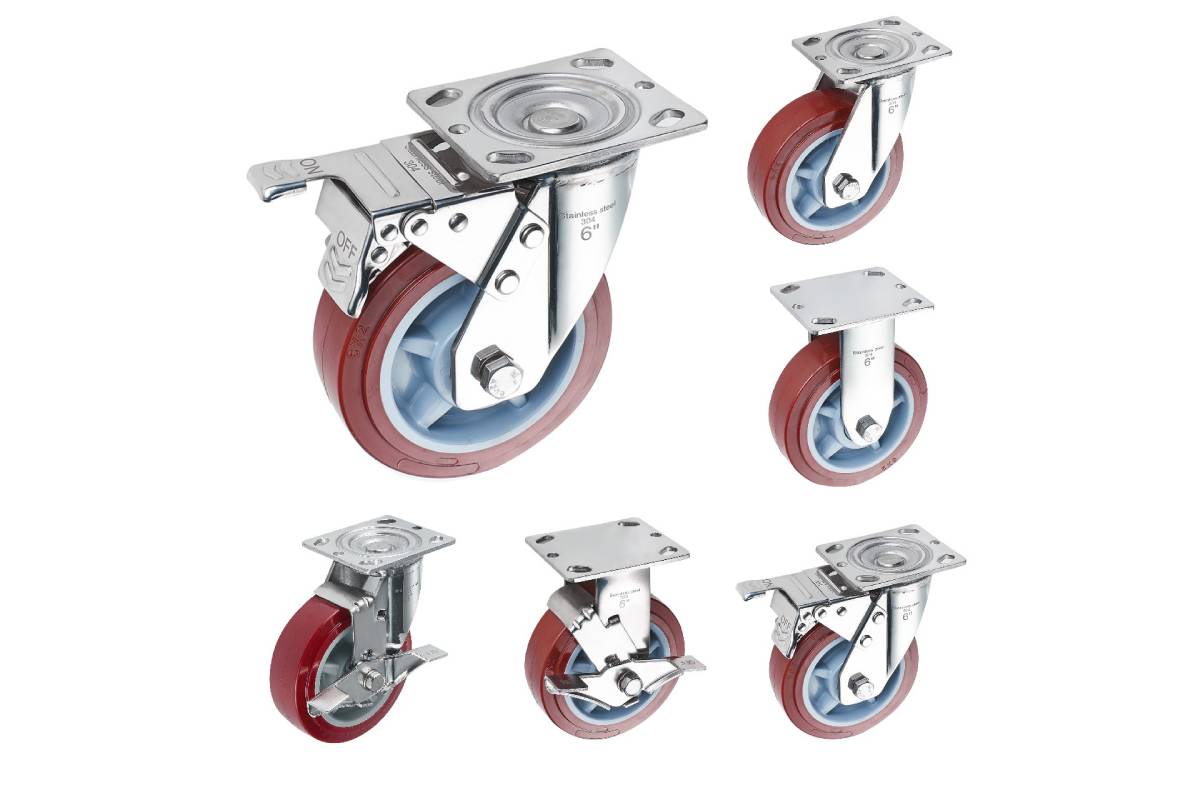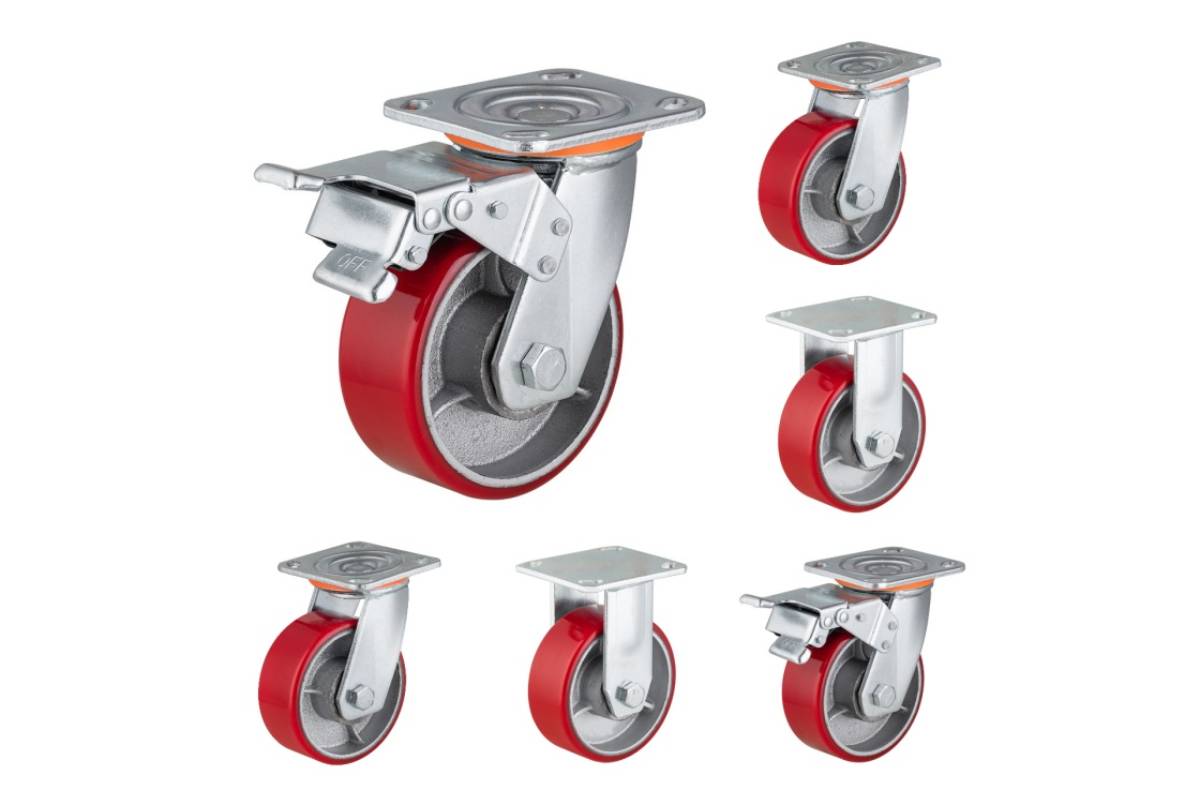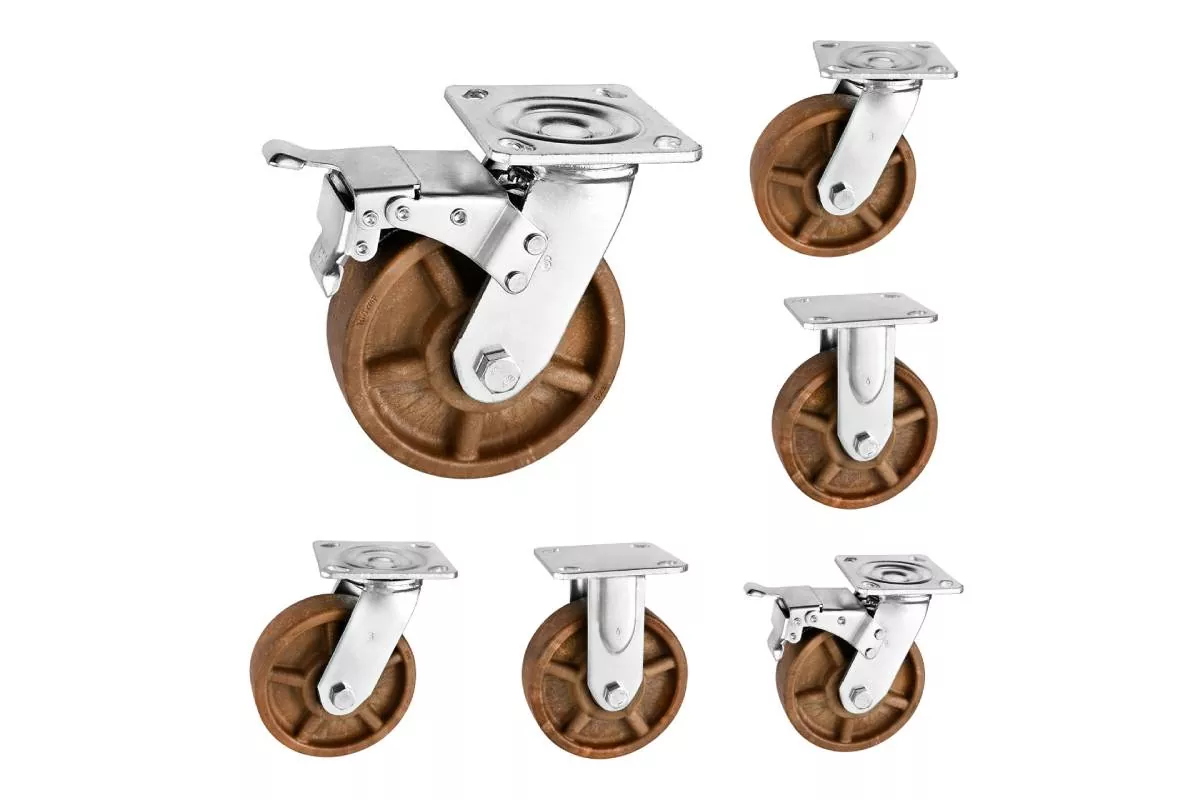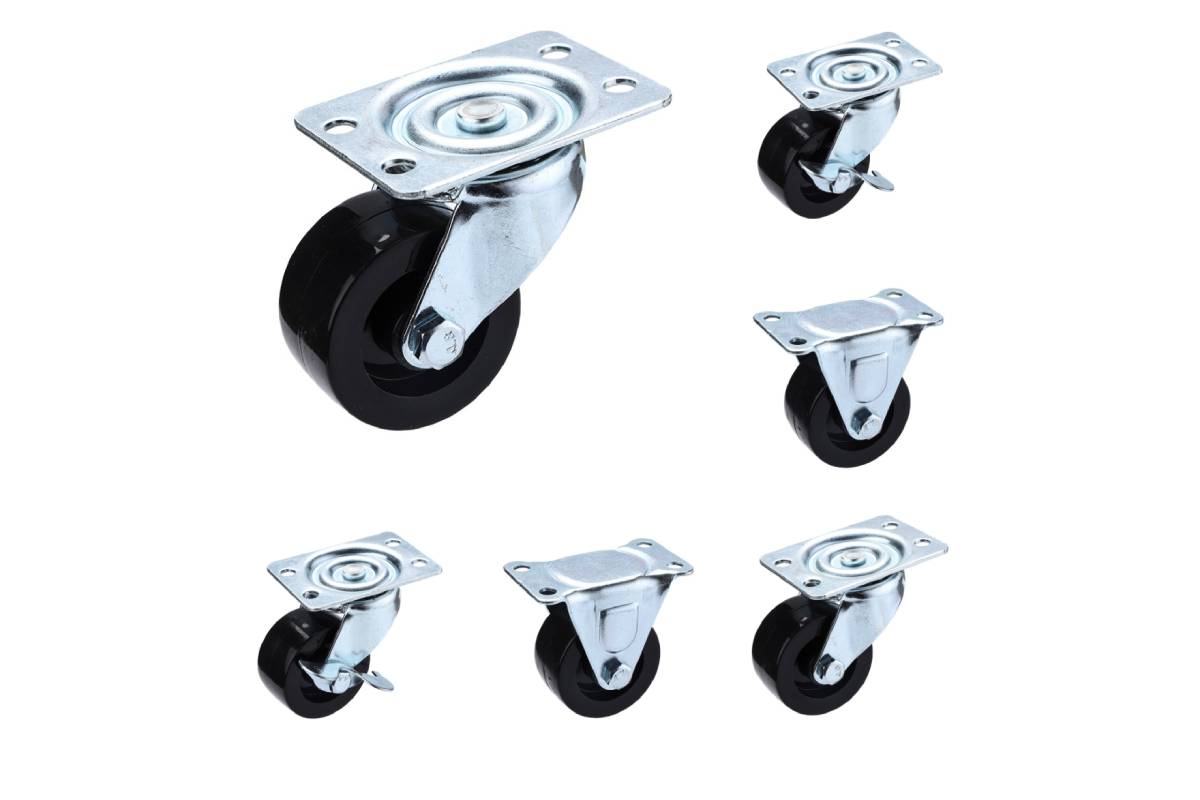

Medical equipment often requires relocation for deep cleaning, routine maintenance, on-site installation or workspace reorganisation. Meanwhile, reliable rigid support is essential once the equipment is stationary for clinical operations. Medical leveling casters solve this dual demand by integrating rolling mobility with an adjustable supporting base. Unlike ordinary swivel casters, they can deliver firm ground contact after positioning. However, for medical device OEMs, selecting suitable casters involves far more than simply checking wheel size or nominal load rating.
Standard casters are designed primarily for movement. Even after activating the wheel brake, the whole equipment still rests on wheel tyres. On uneven hospital floors, tiny slippage and vibration can still occur.
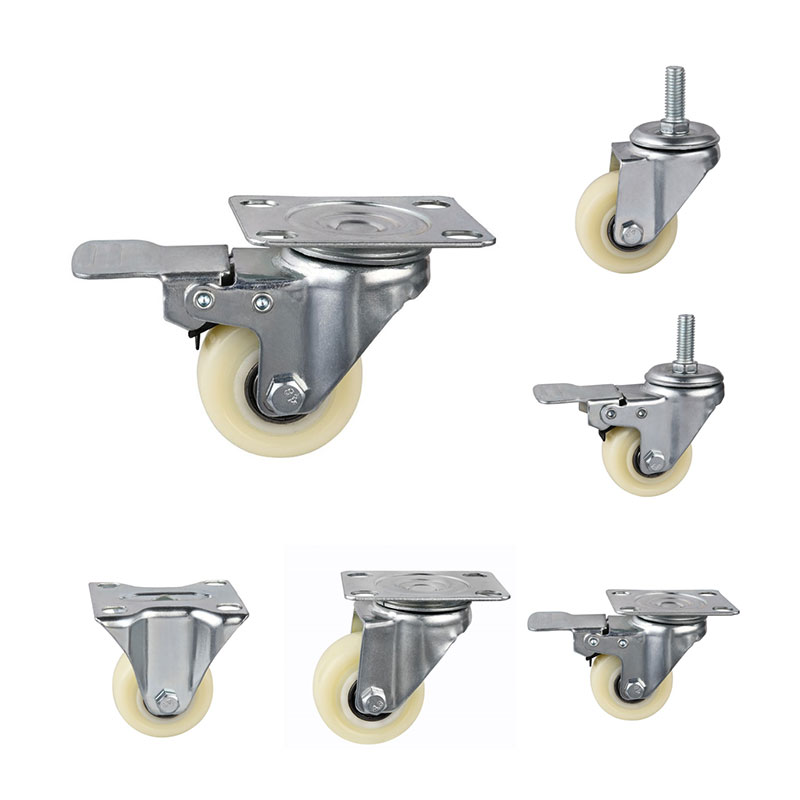
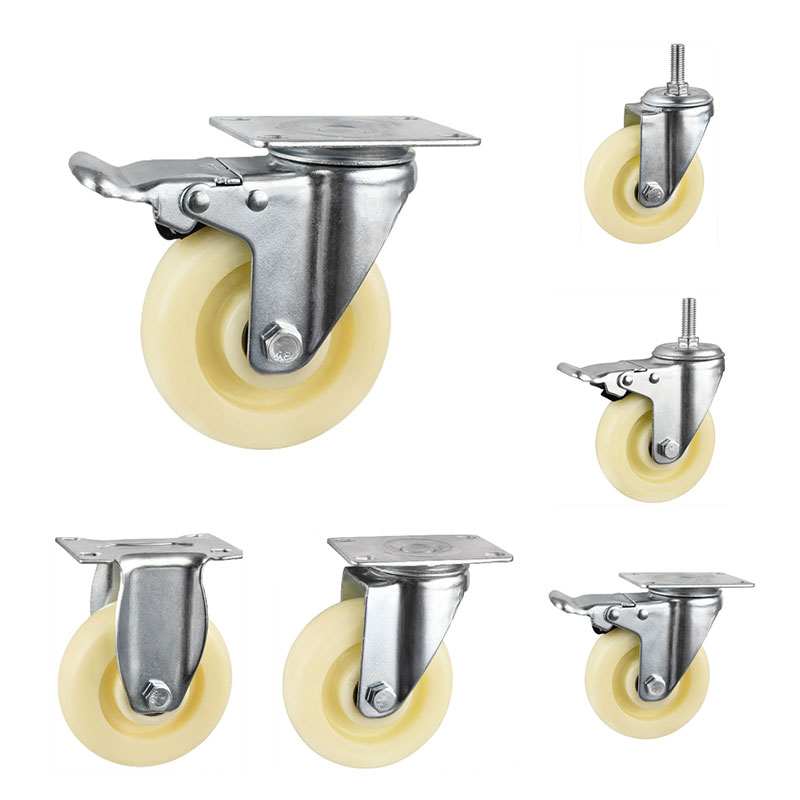
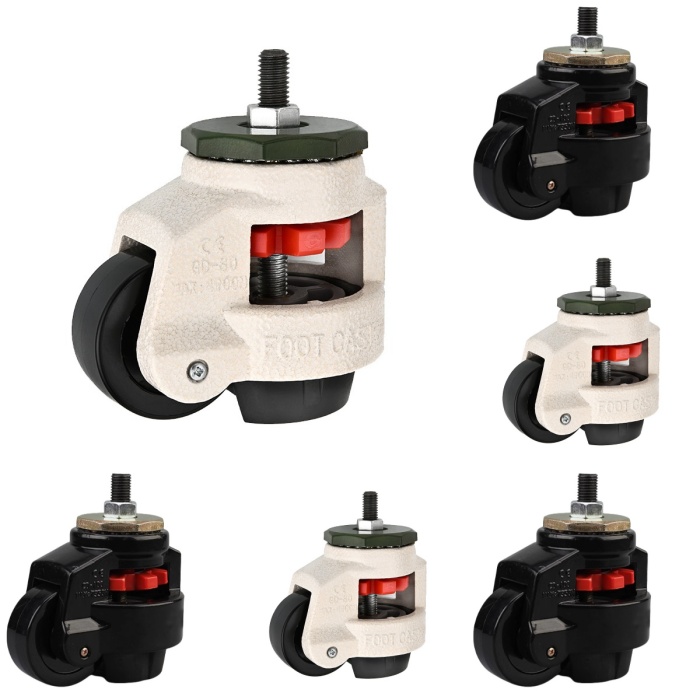
Medical leveling casters combine a swivel wheel assembly with a height-adjustable support foot built into one unit. When relocation is needed, the support foot retracts upwards, transferring weight onto the wheels for smooth rolling. Once the equipment reaches its working station, operators lower the support foot until it touches the floor surface. The load is then shifted from wheels onto the support foot to eliminate micro-shift and vibration.
This integrated design removes the hassle of installing separate fixed support feet alongside mobile casters for medical devices.
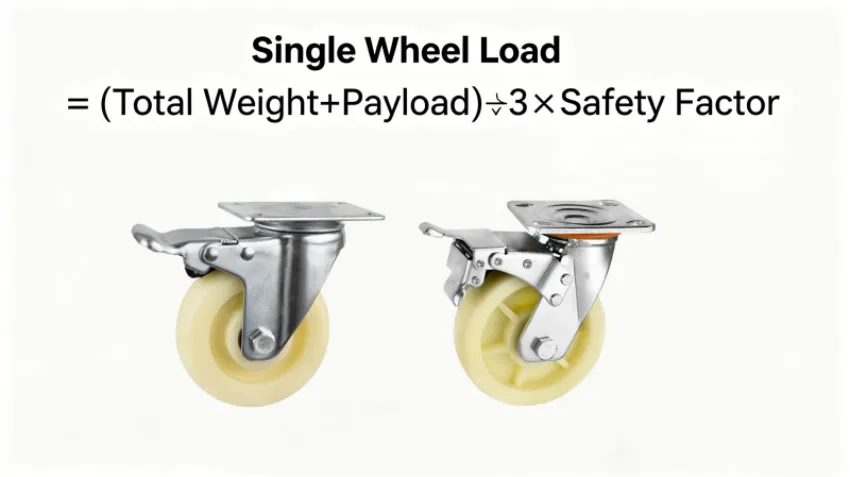
Load capacity must be calculated based on total gross weight plus operational payload, rather than only the empty weight of the equipment. Manufacturers need to evaluate:
· Total fully loaded weight of the equipment
· Extra dynamic load generated during pushing and transportation
· Quantity of casters fitted to the unit
· Load distribution across all support points
· Static and dynamic working conditions
Many medical carts and diagnostic stations have an off-centre heavy component, which creates higher stress on individual casters. A proper safety margin should always be reserved to avoid premature mechanical failure.
Leveling stroke defines the vertical adjustment travel of the support foot. A short adjustment range may work well on brand-new, flat laboratory floors. Older hospital buildings often have tile gaps, expansion joints and worn floor surfaces that demand a longer adjustable range to compensate unevenness. Designers also need to confirm easy access to the adjustment knob after full equipment assembly. Some compact medical cabinets leave limited space to operate the leveling mechanism after caster installation.
Wheel material directly impacts rolling resistance, wear resistance, floor protection and chemical tolerance. Common options include nylon, polyurethane and modified engineered polymers. Floor type is a critical consideration, especially for devices deployed on ceramic tile, vinyl sheet, epoxy coating or concrete surfaces. The selected wheel material must match equipment weight, relocation frequency and floor protection requirements. The contact pad material also needs careful selection: hard pads may scratch delicate flooring, while overly soft pads may suffer permanent compression creep under continuous static load.
Medical and pharmaceutical facilities carry out frequent disinfection cycles. Therefore, caster bodies and metal hardware must withstand the harsh onsite environment. Main evaluation points:
· Corrosion resistance of metal components and threads
· Compatibility with hospital disinfectants
· Resistance to liquid splashes and humidity
· Simple geometry for quick wiping and decontamination
· Long-term maintenance needs for bearings and adjustment threads
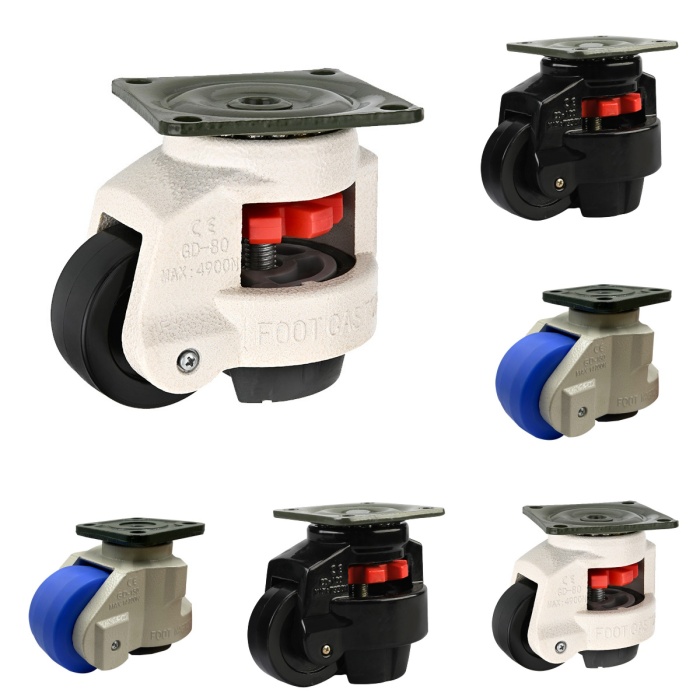
The caster mounting design must match the base frame of medical equipment. Before final selection, OEM designers should verify:
· Mounting style: top plate mount or threaded stem mount
· Bolt hole layout and dimensions
· Overall installed height
· Mechanical strength of the equipment base
· Clearance space around the leveling mechanism
For custom proprietary medical devices, CMCL’s OEM & ODM service can modify plate size, thread specification and overall height to achieve seamless integration with custom equipment bases.
Medical leveling casters are ideal for equipment that requires frequent repositioning together with vibration-free stationary performance:
· Mobile medical workstations and nurse carts
· Laboratory analytical instruments
· Instrument storage and supply cabinets
· Pharmacy compounding and dispensing trolleys
· Technical service and diagnostic carts
The right caster configuration depends on equipment weight, mechanical structure, floor condition, movement frequency and disinfection environment.
CMCL Casters supplies adjustable leveling casters for medical and laboratory equipment OEMs. Customers can select standard models according to load rating, wheel material, mounting type and leveling stroke. For specialised medical projects, CMCL supports fully customised caster development. Our engineering team can tailor mounting dimensions, pad formulations and surface treatments to meet unique hygiene and mechanical requirements.
If you are designing or sourcing mobile medical devices and need technical datasheets or sample support, contact CMCL for application-specific recommendations.