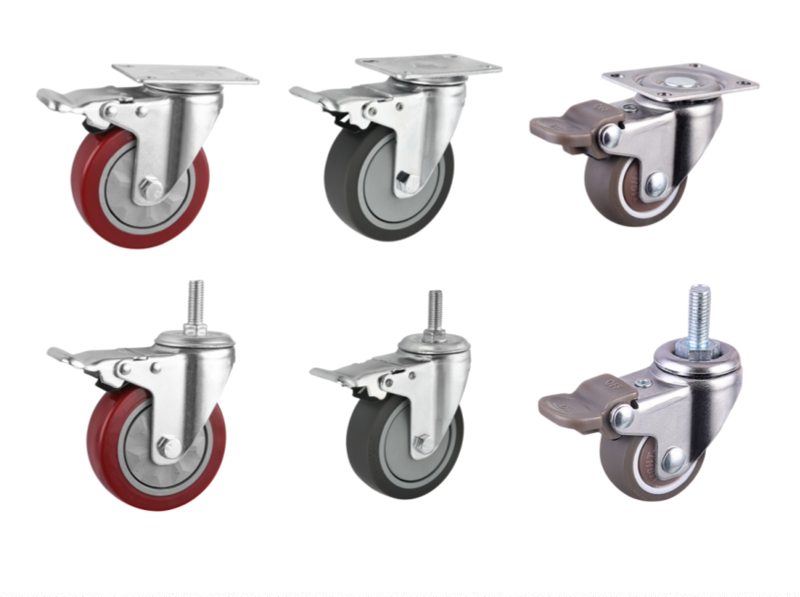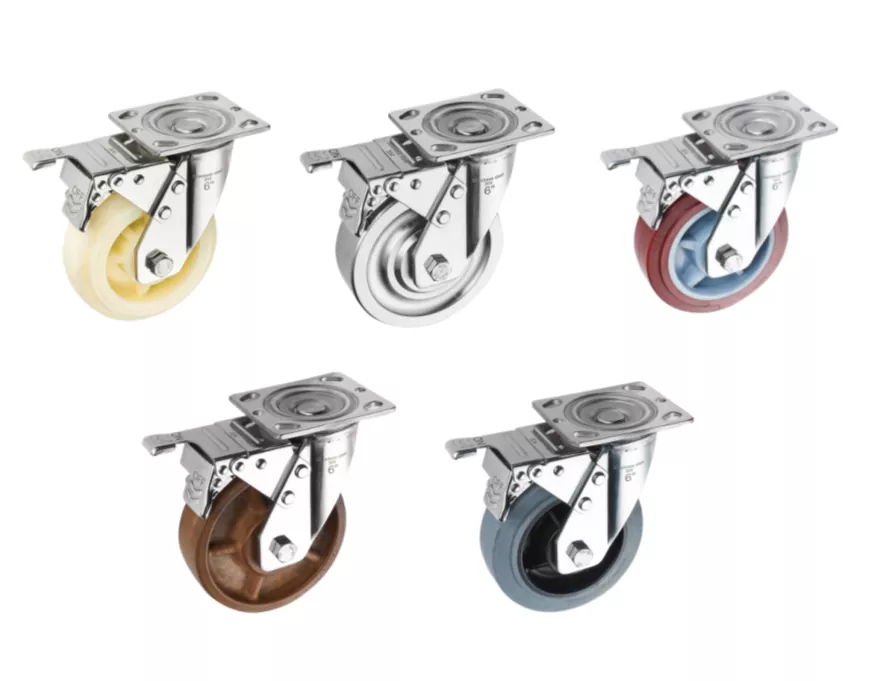

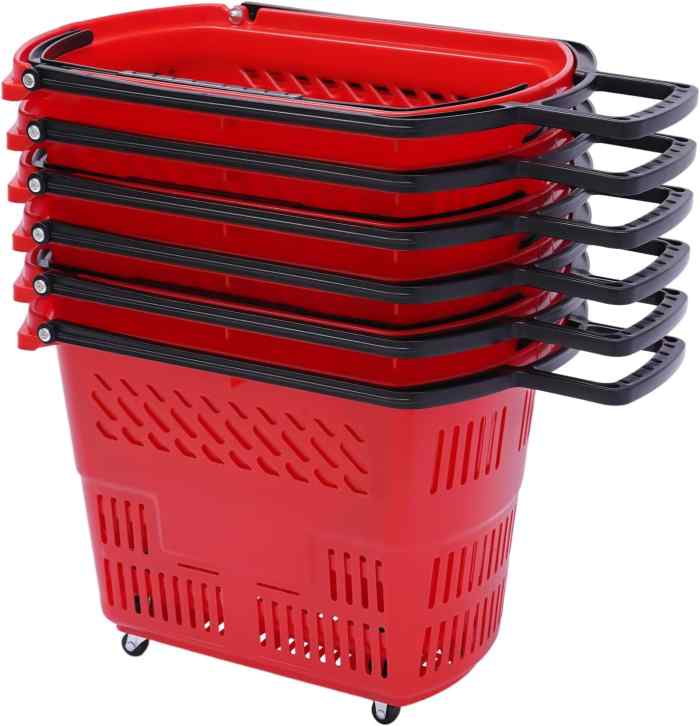
For retailers and manufacturers, a shopping basket with wheels needs to do more than simply move from one aisle to another. It may be pushed hundreds of times a day, loaded with different products, and used on hard floors such as tile, concrete, vinyl, wood, or epoxy. Over time, the caster wheels can have a direct impact on rolling resistance, noise, floor protection, and maintenance costs.
So, which casters are the most durable for rolling shopping baskets?
For most applications, the answer depends on how the basket is used. PP, PU, and TPR casters each offer a different balance of durability, cost, noise control, and floor protection. Choosing the right material according to the basket load, floor condition, and daily usage frequency is more important than simply selecting the cheapest or hardest wheel.
Caster durability is not determined by wheel material alone. Several factors affect how long a caster can remain reliable in daily retail use:
For this reason, the most durable caster is not necessarily the same for every shopping basket.
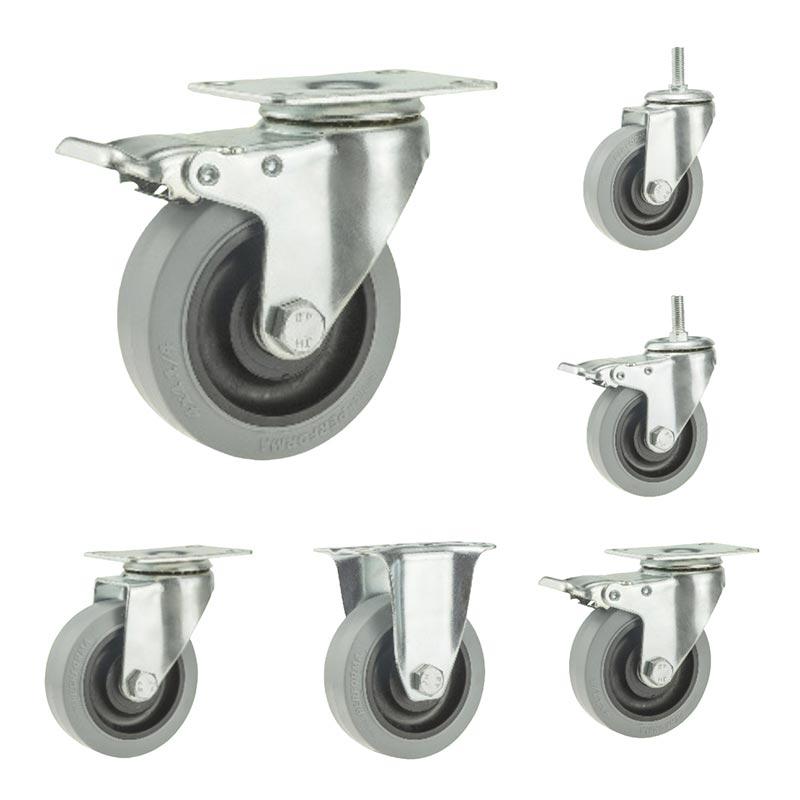
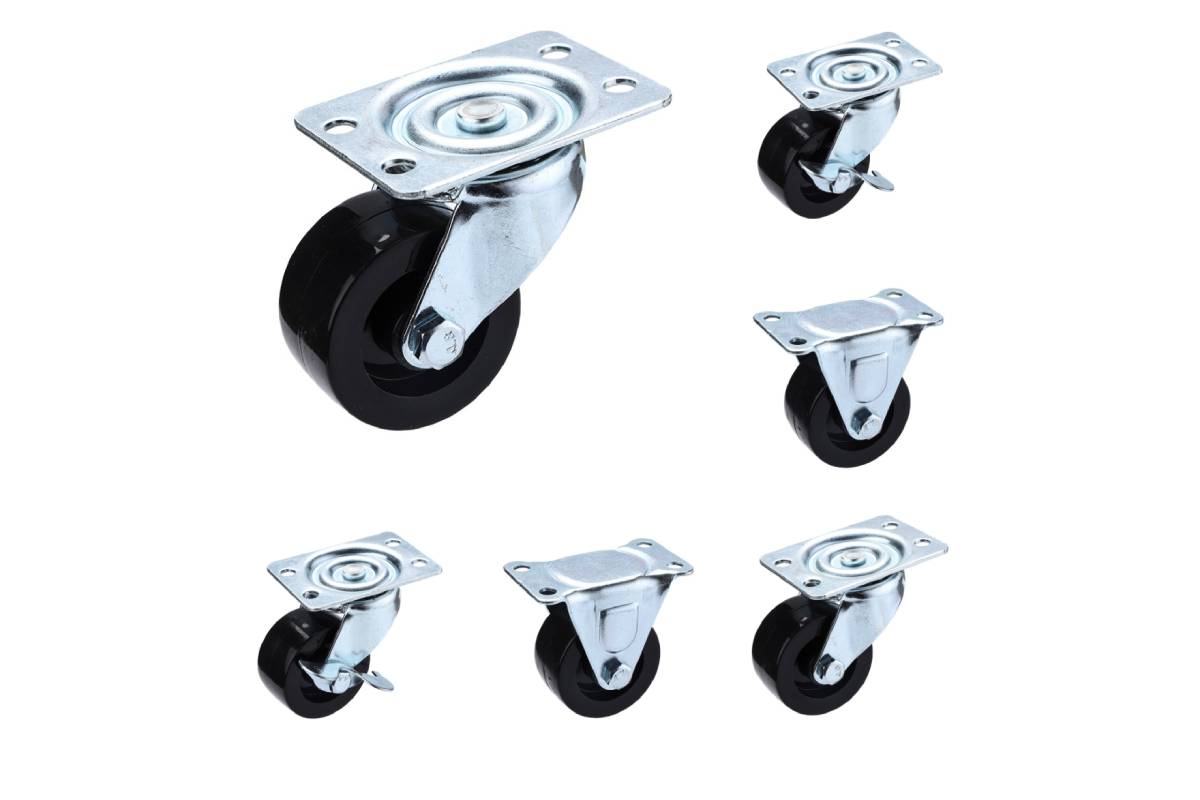
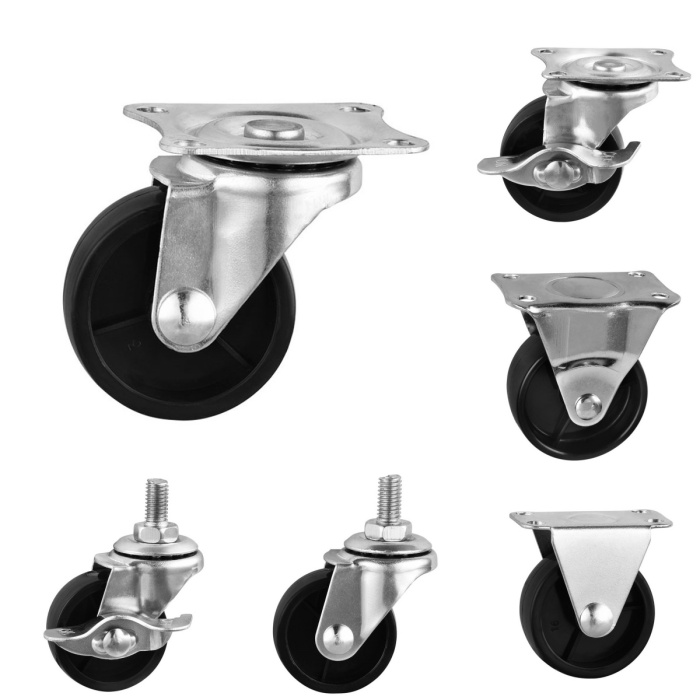
PP casters are often selected for lightweight plastic shopping baskets where keeping the overall product cost under control is important. Polypropylene provides good rigidity, dimensional stability, and resistance to deformation under normal light loads.
They work particularly well on smooth supermarket and convenience-store floors where baskets are not heavily loaded and rolling distances are relatively short.
However, the harder wheel surface can produce more rolling noise than softer wheel materials. PP may also be less suitable for delicate flooring where surface protection is a priority.
Best suited for:
If the basket is used occasionally and carries a relatively light load, PP can provide a sensible balance between basic durability and cost.
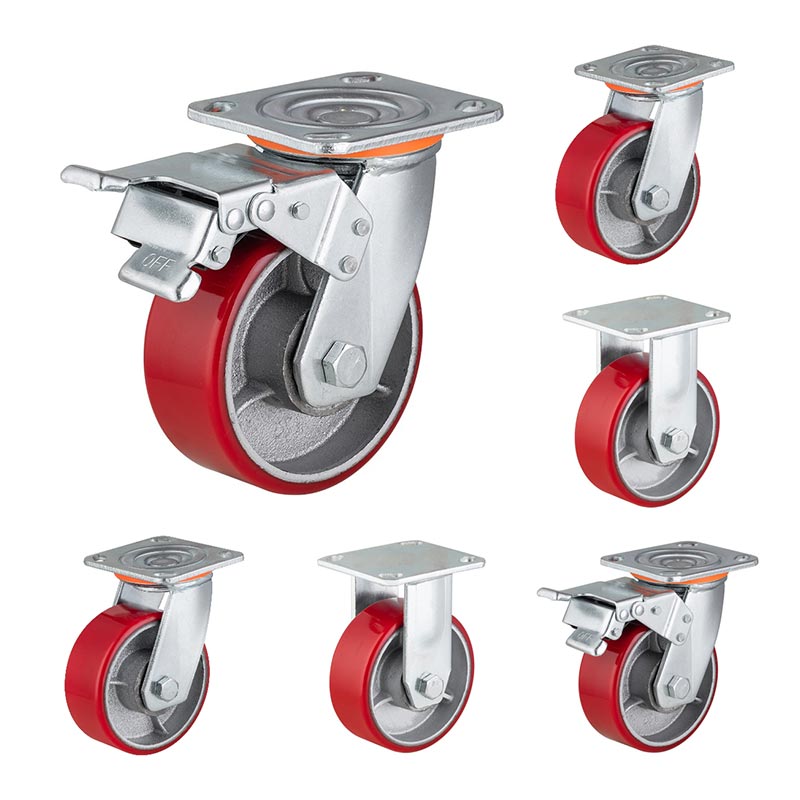
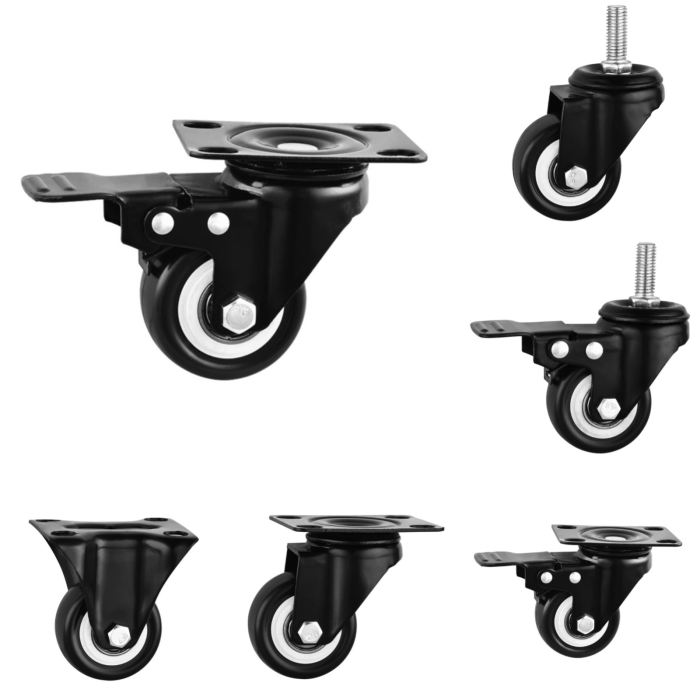
When shopping baskets are pushed continuously throughout the day, wheel wear becomes more important than the initial caster price. In these situations, PU casters are often a better choice.
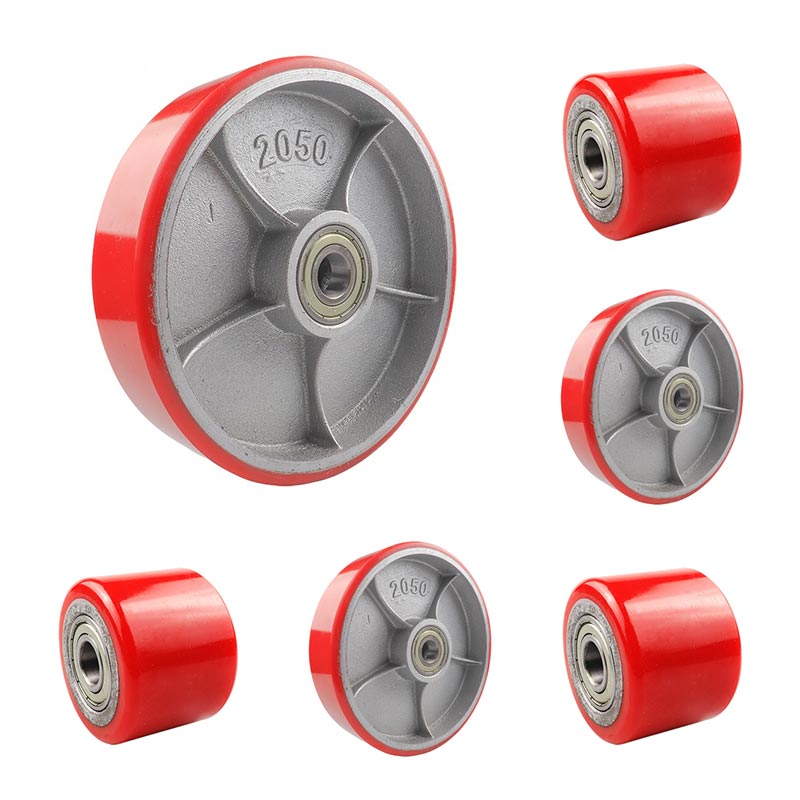
Polyurethane wheels offer good abrasion resistance and load-bearing capability while producing less rolling noise than rigid PP wheels. Their resilient tread also helps the basket move more smoothly across common retail flooring.
For large supermarkets, wholesale stores, and busy retail environments, PU can be particularly useful when baskets experience frequent loading, pushing, turning, and occasional impacts.
Another advantage is floor protection. Compared with rigid plastic wheels, PU generally provides a softer contact surface, reducing the risk of visible marks on suitable indoor floors.
Best suited for:
For manufacturers looking for a durable caster for frequently used rolling shopping baskets, PU is often one of the most practical choices.
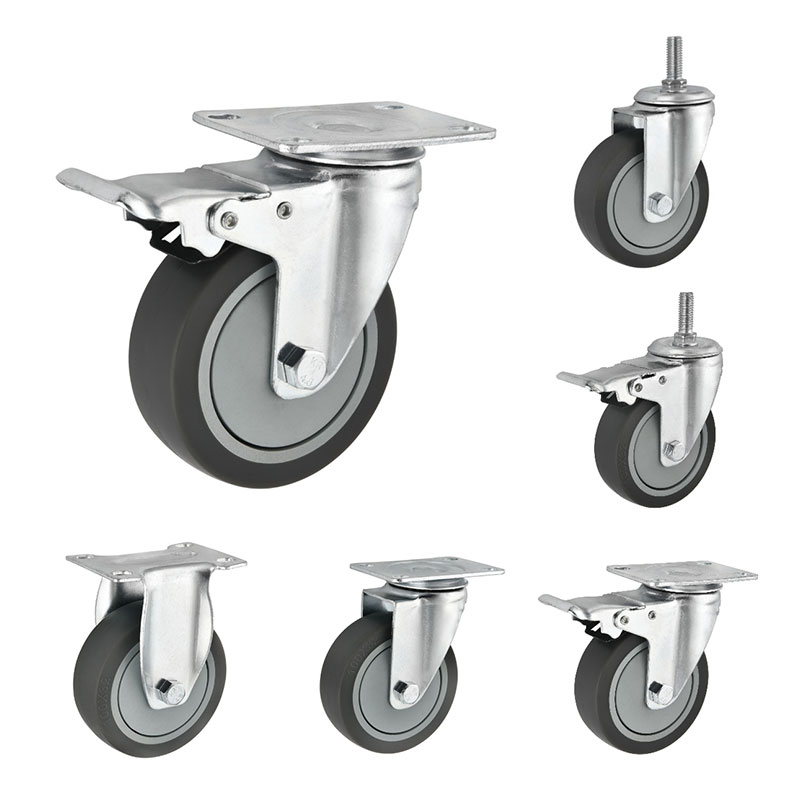
TPR casters take a different approach. Instead of focusing primarily on rigidity or maximum wear resistance, TPR combines a rigid wheel structure with a softer thermoplastic rubber tread.
This makes TPR particularly attractive when low noise and floor protection are important.
When customers move baskets across tile, wood, vinyl, or other finished indoor surfaces, a softer tread can reduce harsh rolling sounds and provide a smoother feel. TPR also helps absorb minor vibration when the basket passes over small joints or uneven sections of flooring.
For premium retail environments where customer comfort and a clean floor appearance matter, TPR can be a strong alternative to conventional rigid plastic wheels.
Best suited for:
TPR may not always be the highest-load option, but its combination of quiet operation, floor friendliness, and adequate durability makes it a versatile choice.
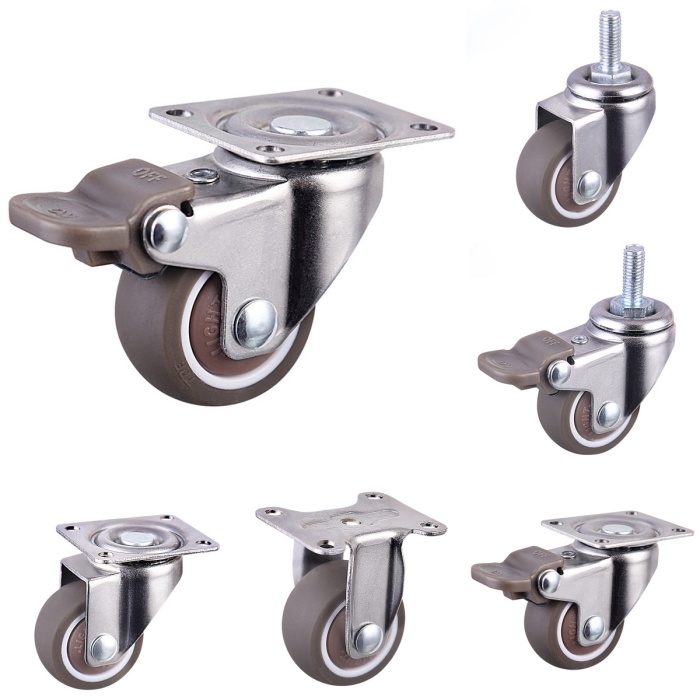
| Caster Material | Durability | Rolling Noise | Floor Protection | Cost | Recommended Use |
| PP | Good for light duty | Higher | Basic | Low | Lightweight baskets |
| PU | Very good | Low | Very good | Medium | High-frequency use |
| TPR | Good to very good | Very low | Excellent | Medium | Quiet retail environments |
The table provides a general comparison, but the actual service life will still depend on wheel size, basket load, floor condition, caster construction, and usage frequency.
Before choosing a caster, manufacturers should consider the actual working conditions rather than selecting a wheel material based only on price.
1. Check the maximum basket load
Calculate the basket's maximum operating weight, including the basket itself and its contents. The selected caster should have sufficient load capacity with an appropriate safety margin.
2. Consider how often the basket is used
A basket used occasionally in a small shop does not require the same caster specification as one that is continuously pushed around a busy supermarket.
3. Look at the floor surface
Smooth ceramic tile, vinyl, wood, epoxy, and rough concrete can produce very different levels of rolling resistance and wheel wear.
4. Decide how important noise is
For supermarkets, shopping malls, and other customer-facing environments, quieter wheels can improve the overall user experience. TPR and PU are generally worth considering when noise is a concern.
5. Balance purchase cost with service life
A low-cost caster may reduce the initial product cost, but frequent wheel replacement can increase maintenance expenses over the product's service life. For high-traffic applications, a more wear-resistant wheel may provide better overall value.
As a caster manufacturer, CMCL Casters focuses on matching caster construction and wheel material with the actual application rather than recommending one material for every basket.
For manufacturers developing plastic rolling shopping baskets, factors such as load capacity, wheel diameter, mounting method, floor type, rolling frequency, and noise requirements can all be considered when selecting a suitable caster configuration. Quality and material compliance are also important considerations for long-term use. CMCL Casters has established an ISO 9001 quality management system, and our products undergo a 24-hour salt spray test to evaluate corrosion resistance. Most of our caster products also comply with EU RoHS environmental requirements, supporting safer and more environmentally responsible product applications.
This application-based approach helps manufacturers choose a caster that fits the basket's working conditions while avoiding unnecessary specifications and costs. By combining application-focused caster selection with controlled manufacturing and quality testing, CMCL Casters provides manufacturers with reliable caster solutions for different rolling shopping basket applications.
There is no single caster material that is the most durable for every shopping basket.
For most high-frequency retail applications, PU is a strong choice when durability is the main objective, while TPR becomes more attractive when noise and floor protection are equally important.
Ultimately, the right shopping basket casters should be selected according to the basket's actual load, operating frequency, floor conditions, and expected service life. A properly matched caster can reduce premature wheel replacement, improve rolling performance, and provide a better experience for both retailers and customers.