
A rolling kitchen island can add valuable workspace without permanently taking up floor space. It can be moved closer to a cooking area, used as a serving station, or pushed aside when more room is needed.
The casters underneath the island play an important role in how safely and comfortably it moves. Wheel material affects rolling noise, floor protection, load capacity, and overall handling. For many kitchen island applications, PP (polypropylene) and PU (polyurethane) casters are two practical options to consider.
So which one should you choose? The answer depends less on the material name itself and more on the island's loaded weight, flooring, movement frequency, and mounting requirements.
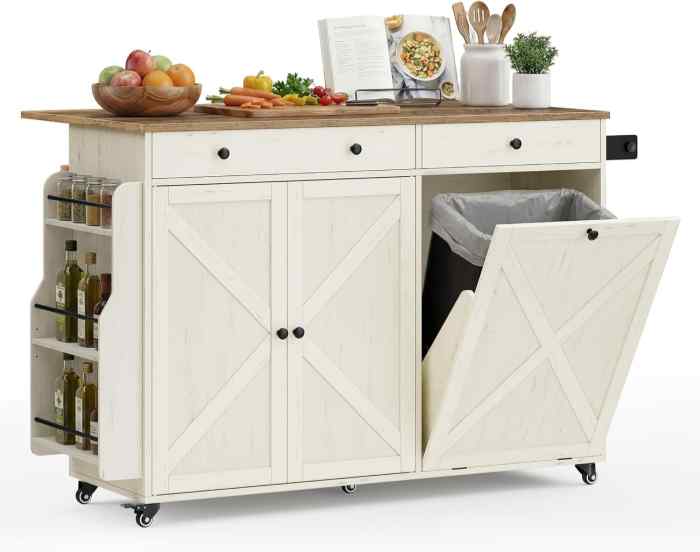
A kitchen island may look like ordinary furniture, but a fully loaded unit can become surprisingly heavy. Cookware, appliances, food, and a solid countertop can add considerable weight.
Before selecting a wheel material, check these four points.
Calculate the approximate weight of the island when fully loaded, not just the empty cabinet.
For a four-caster setup, do not simply divide the total weight by four. Uneven floors and uneven load distribution can mean that individual casters carry different amounts of weight. Selecting casters with a reasonable capacity margin provides a more practical safety buffer.
For many rolling kitchen islands, 1.5 inch, 2 inch, and 2.5 inch wheels are practical starting points, depending on cabinet design and required clearance.
Larger wheels generally move more easily across tile grout lines, small floor gaps, and minor debris. However, a larger wheel also increases the overall caster height, so the finished working height of the island should be checked before installation.
A movable island needs to stay in place while food is being prepared.
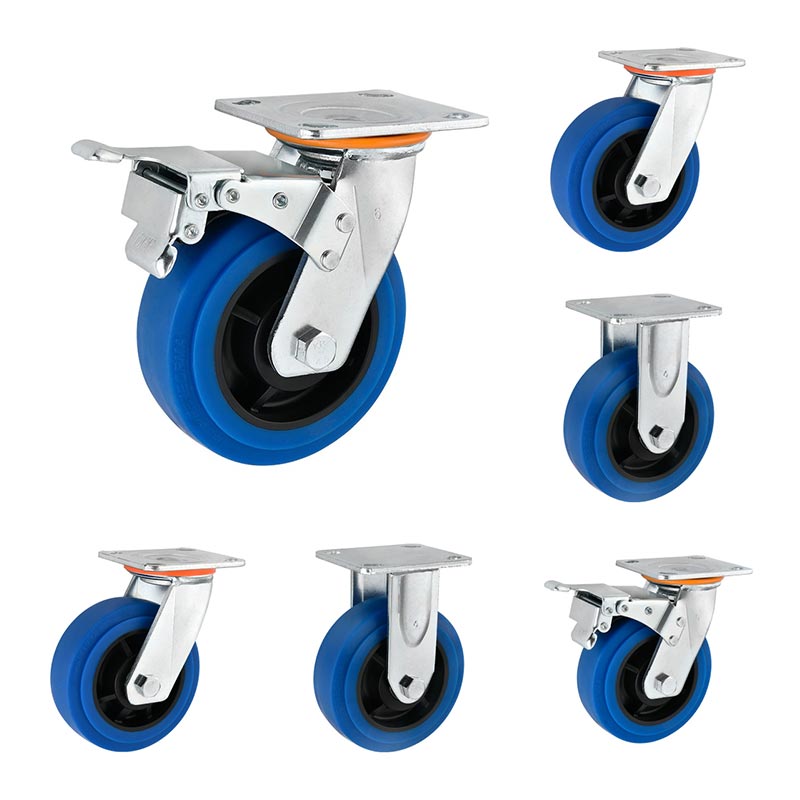
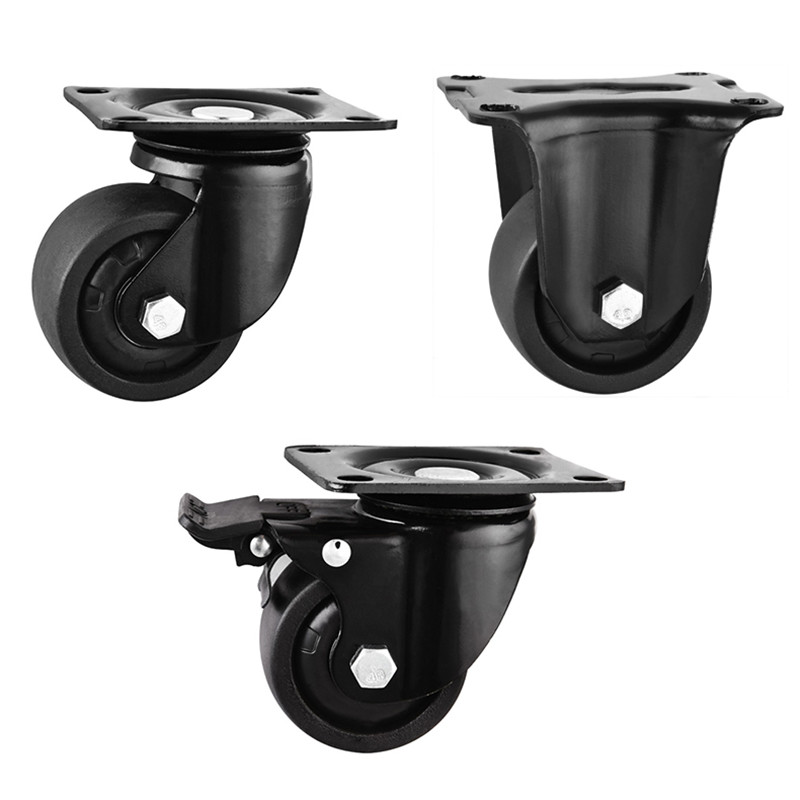
A total-lock caster, which locks both wheel rotation and swivel movement, can provide more stability than a swivel brake that only restricts wheel movement. For an island that is frequently used as a work surface, locking function should be treated as an important part of caster selection rather than an optional feature.
Check the mounting plate, hole spacing, bolt clearance, and overall caster height before ordering.
A caster that fits the load requirement but does not match the cabinet mounting structure can still cause installation problems. Caster height also changes the final countertop height, which can affect everyday cooking comfort.
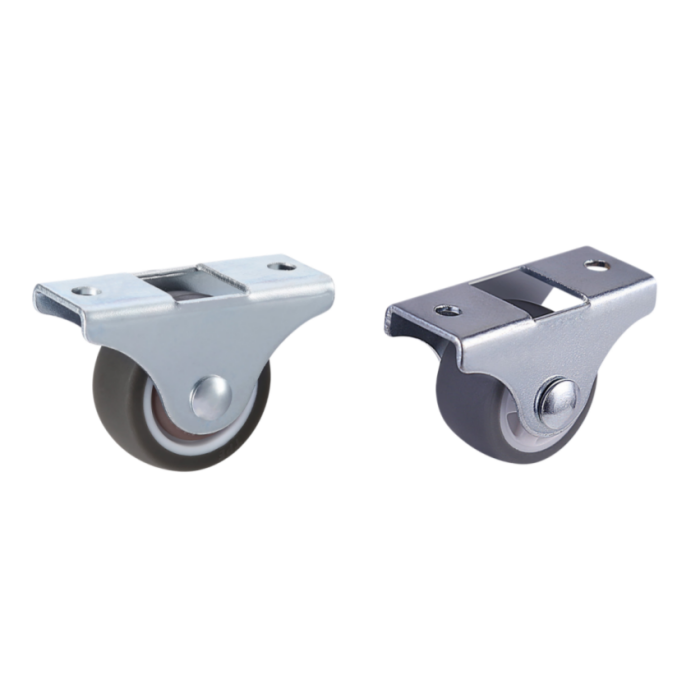
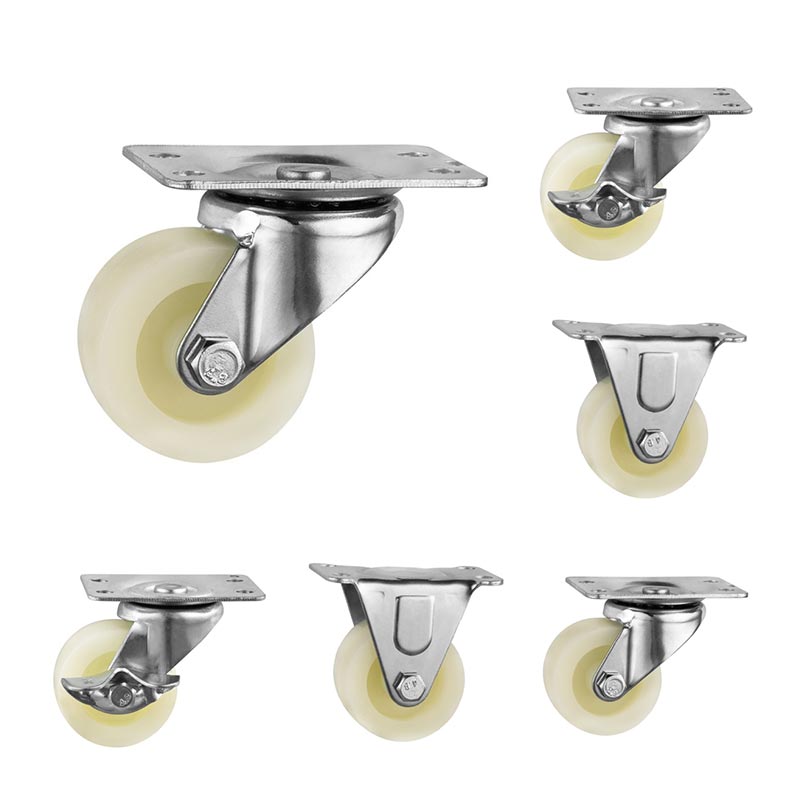
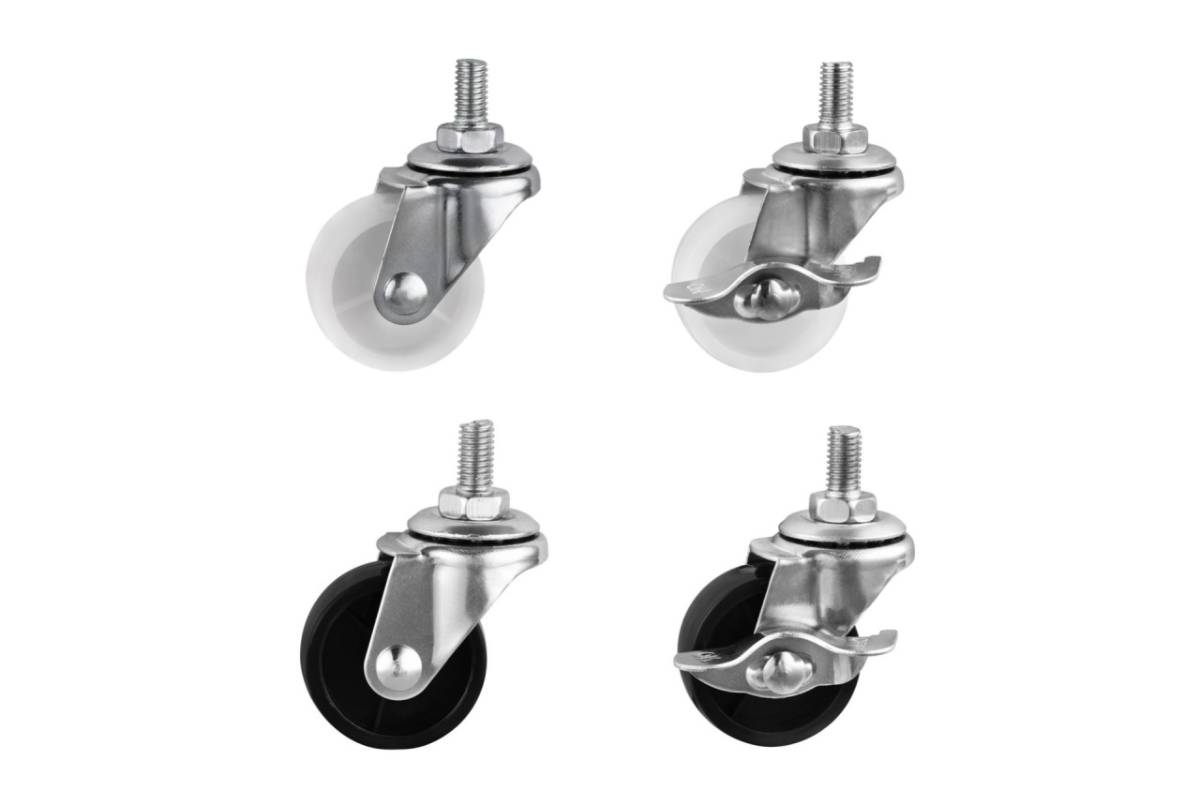
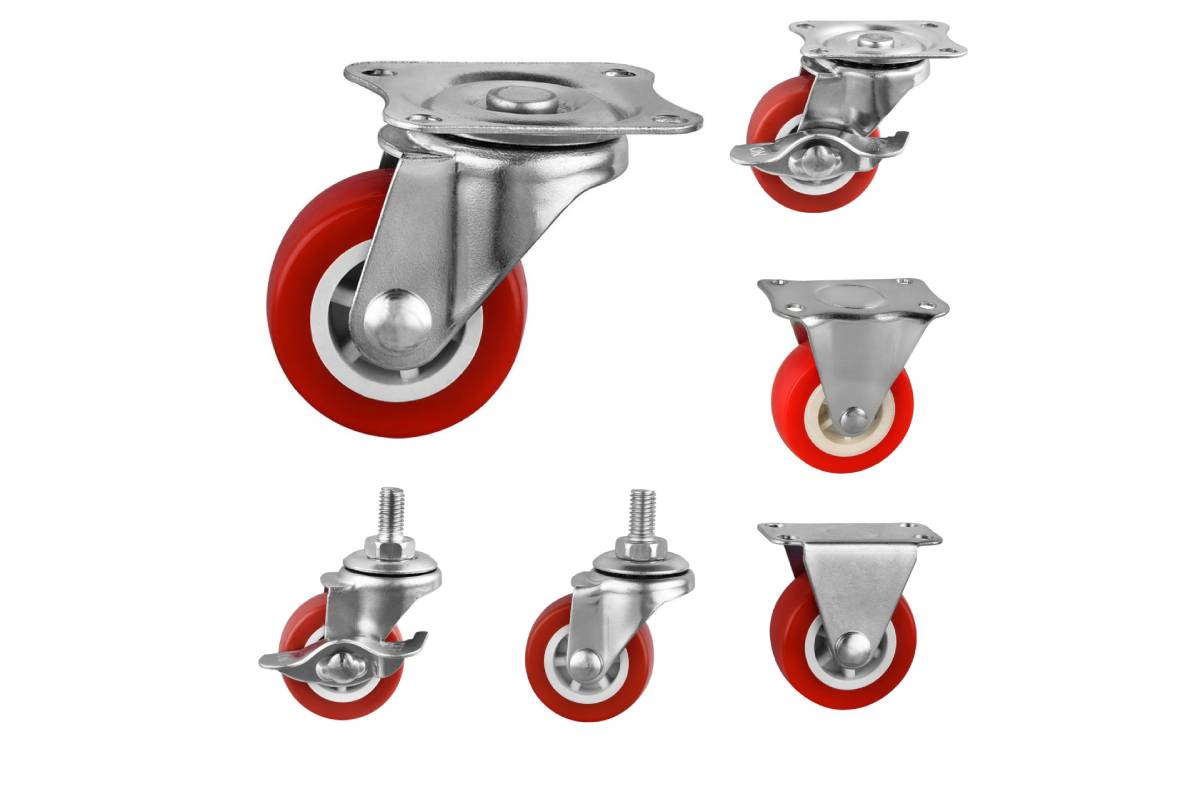
PP, or polypropylene, is a hard plastic wheel material commonly used in furniture and light duty caster applications.
For a kitchen island that is relatively light, moved only occasionally, and installed on a floor where rolling noise is not a major concern, PP can be a cost-conscious option.
Depending on the specific model, CMCL Casters' PP wheel range includes sizes from 1 inch to 3 inches, with single-wheel load ratings ranging from approximately 5 kg to 50 kg. The actual capacity depends on the caster size and construction.
PP wheels can be considered when:
· The island has a relatively light overall load.
· The unit is moved occasionally rather than continuously.
· Keeping caster cost low is important.
· The floor is relatively smooth and durable.
· The application does not require particularly quiet rolling.
The hard wheel construction also provides good resistance to deformation when the island remains stationary under load.
The same hard-wheel characteristics that make PP economical can also make it less forgiving on finished flooring.
Compared with a softer wheel material, PP can produce more rolling noise on hard tile or wood surfaces. It may also transmit more vibration when passing over grout lines or small floor irregularities.
For this reason, PP is generally more suitable for lighter mobile kitchen islands, utility-style islands, and budget-conscious furniture projects where quiet movement and premium floor protection are not the primary requirements.
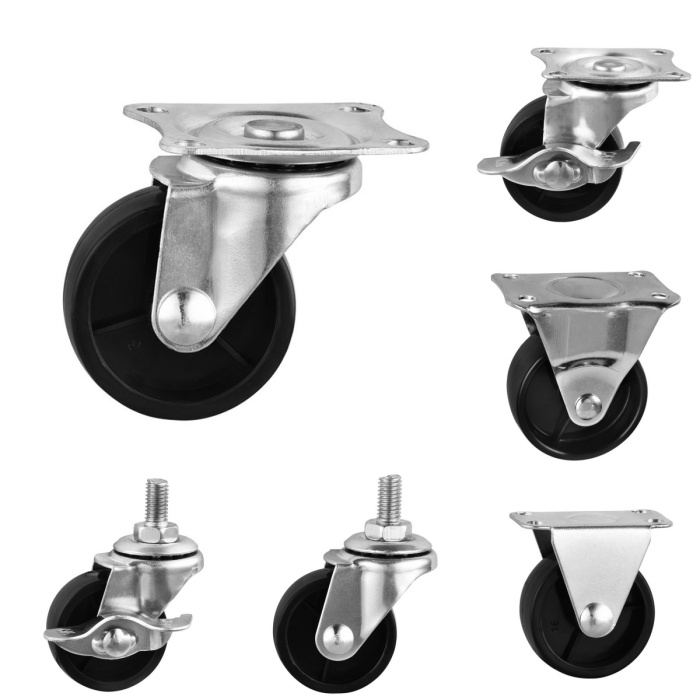
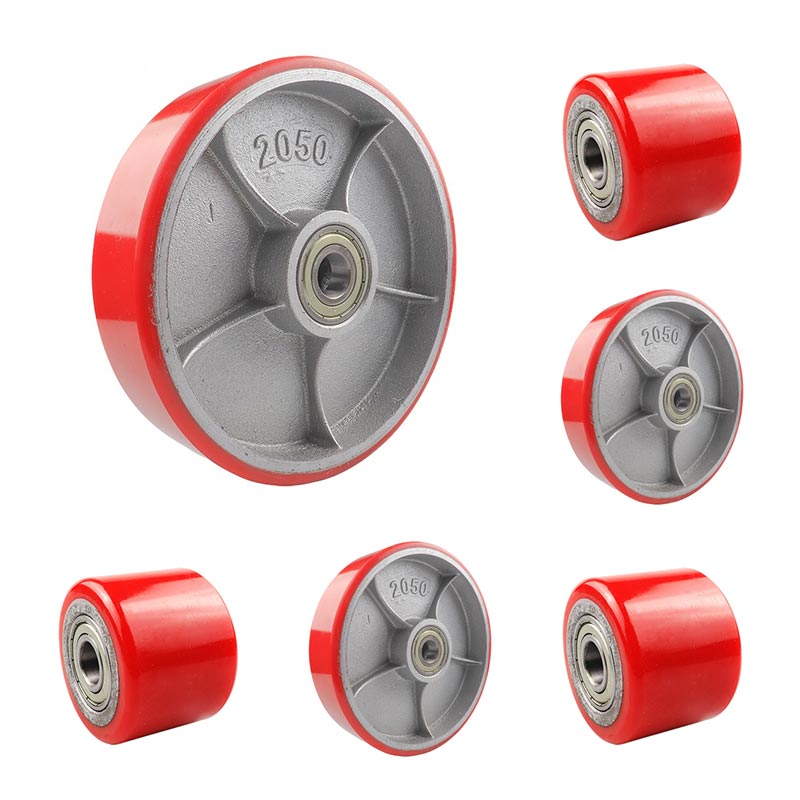
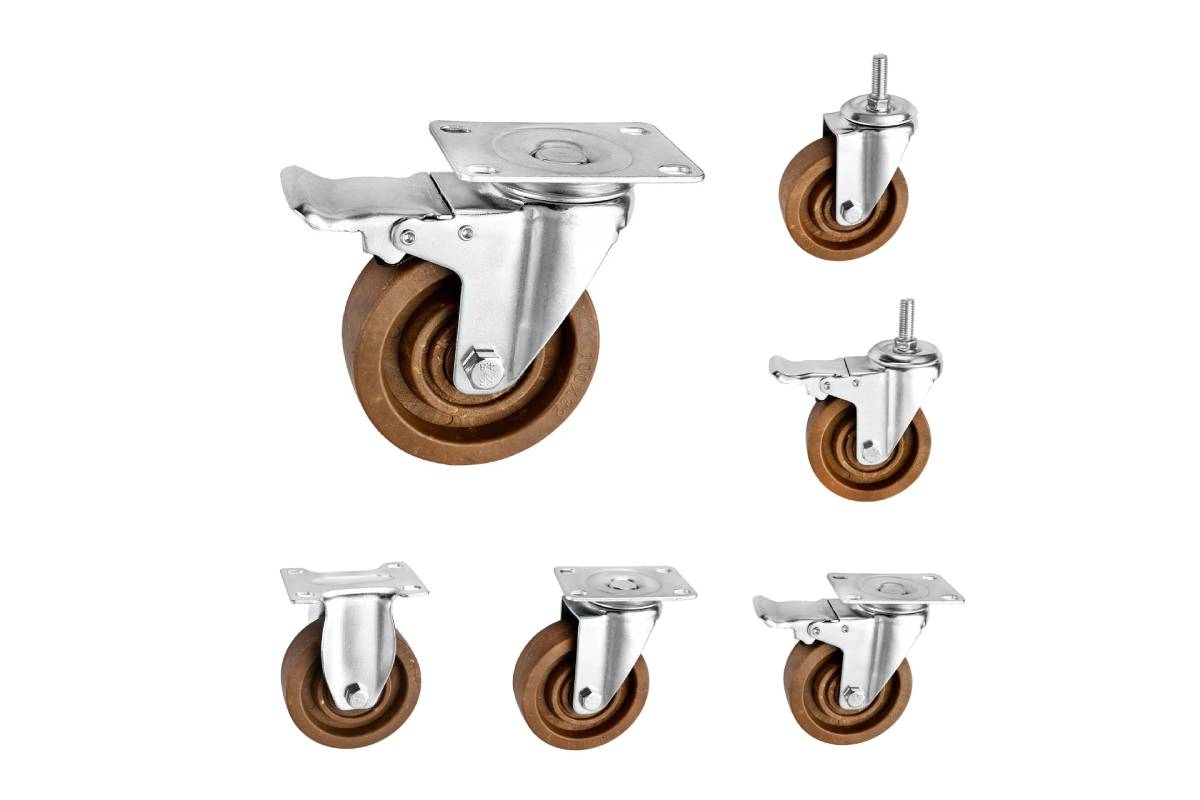
PU, or polyurethane, combines a relatively tough wheel structure with an elastic tread. This makes it a common choice when smoother movement and floor protection are more important.
For a kitchen island that is moved several times a day, carries heavier cookware, or sits on finished hardwood or vinyl flooring, PU can offer practical advantages over a hard plastic wheel.
Depending on the model, PU caster load ratings can reach approximately 50–60 kg per wheel, but the actual capacity should always be checked against the selected caster specification.
PU casters are particularly useful when the application requires:
· Quieter rolling across hard floors
· Reduced vibration during movement
· Non-marking contact with finished flooring
· Higher load capacity within a compact caster size
· Better rolling comfort for frequent repositioning
The elastic tread helps absorb some vibration from floor joints and small irregularities. It can also reduce the harsh rolling sound often associated with hard plastic wheels.
PU casters normally cost more than basic PP alternatives. Their softer tread can also require more attention when exposed to prolonged contact with hot grease or aggressive cleaning conditions.
For ordinary indoor kitchen use, however, PU is a strong option when floor protection, quiet movement, and frequent repositioning are more important than minimizing the initial caster cost.
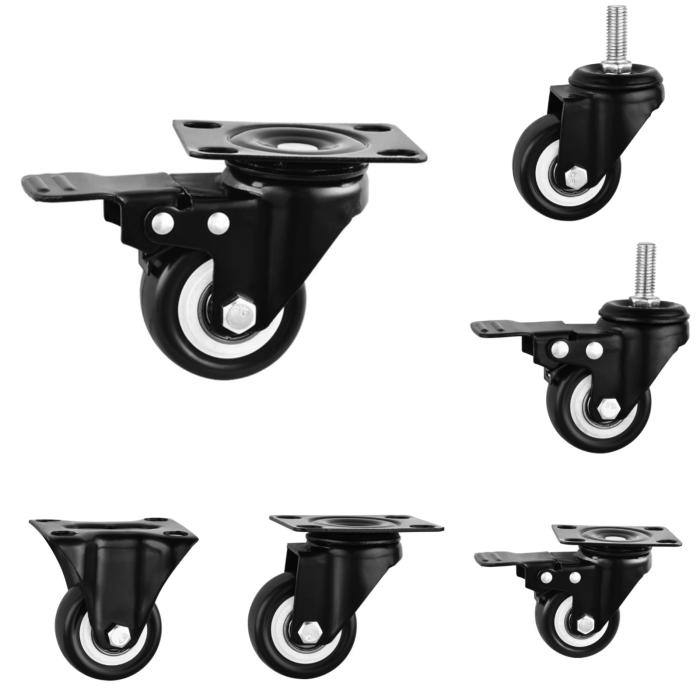
| Factor | PP Casters | PU Casters |
| Wheel feel | Hard | Elastic / cushioned |
| Rolling noise | Higher on hard floors | Generally quieter |
| Floor protection | Moderate | Better for finished flooring |
| Typical single-wheel load* | Approx. 5–50 kg | Approx. 50–60 kg |
| Cost | Lower | Moderate to higher |
| Vibration absorption | Limited | Better |
| Best suited to | Light-duty islands and budget projects | Heavier or frequently moved islands |
| Hardwood / finished vinyl | Use with care | Generally more suitable |
| Frequent movement | Acceptable | Better choice |
Load ratings vary by wheel diameter, caster construction, mounting method, and specific model. Always check the manufacturer's specification for the selected caster.
Instead of choosing a wheel material based only on price, consider how the island will actually be used.
Your island is relatively lightweight, movement is occasional, and keeping the caster cost down is a priority. PP can be a sensible solution for utility-style or budget-oriented furniture.
The island carries heavier cookware or appliances, is moved frequently, or sits on finished hardwood, vinyl, or another surface where quiet and smooth movement matter.
For a large island with a solid countertop and substantial stored contents, wheel material is only one part of the selection process. Load rating, wheel diameter, caster structure, mounting method, and brake design should all be evaluated together.
A higher-capacity PU caster may be appropriate, but the correct choice ultimately depends on the actual loaded weight and cabinet construction.
For indoor furniture applications, caster quality involves more than wheel material. Bracket construction, bearings, mounting strength, brake performance, and corrosion resistance can all influence long-term reliability.
CMCL manufactures caster solutions for furniture and other mobile equipment, with products produced under an ISO 9001:2015 quality management system. Selected metal components undergo a 24-hour salt spray test for corrosion-resistance evaluation, and applicable product ranges are designed to meet RoHS requirements.
For furniture manufacturers sourcing from a China caster manufacturer, it is useful to evaluate these manufacturing and testing details alongside wheel material, dimensions, and load capacity.