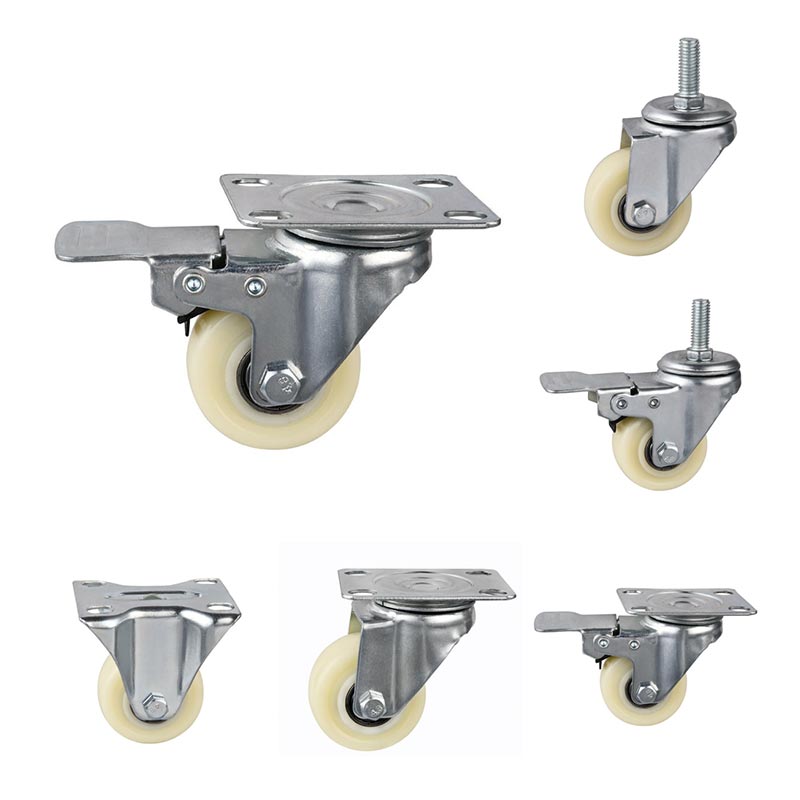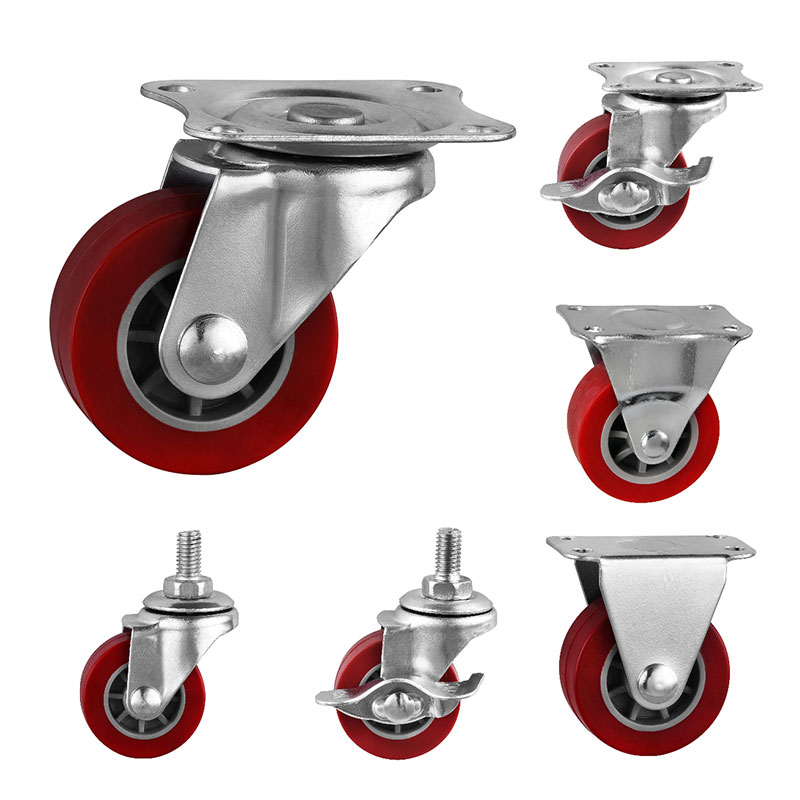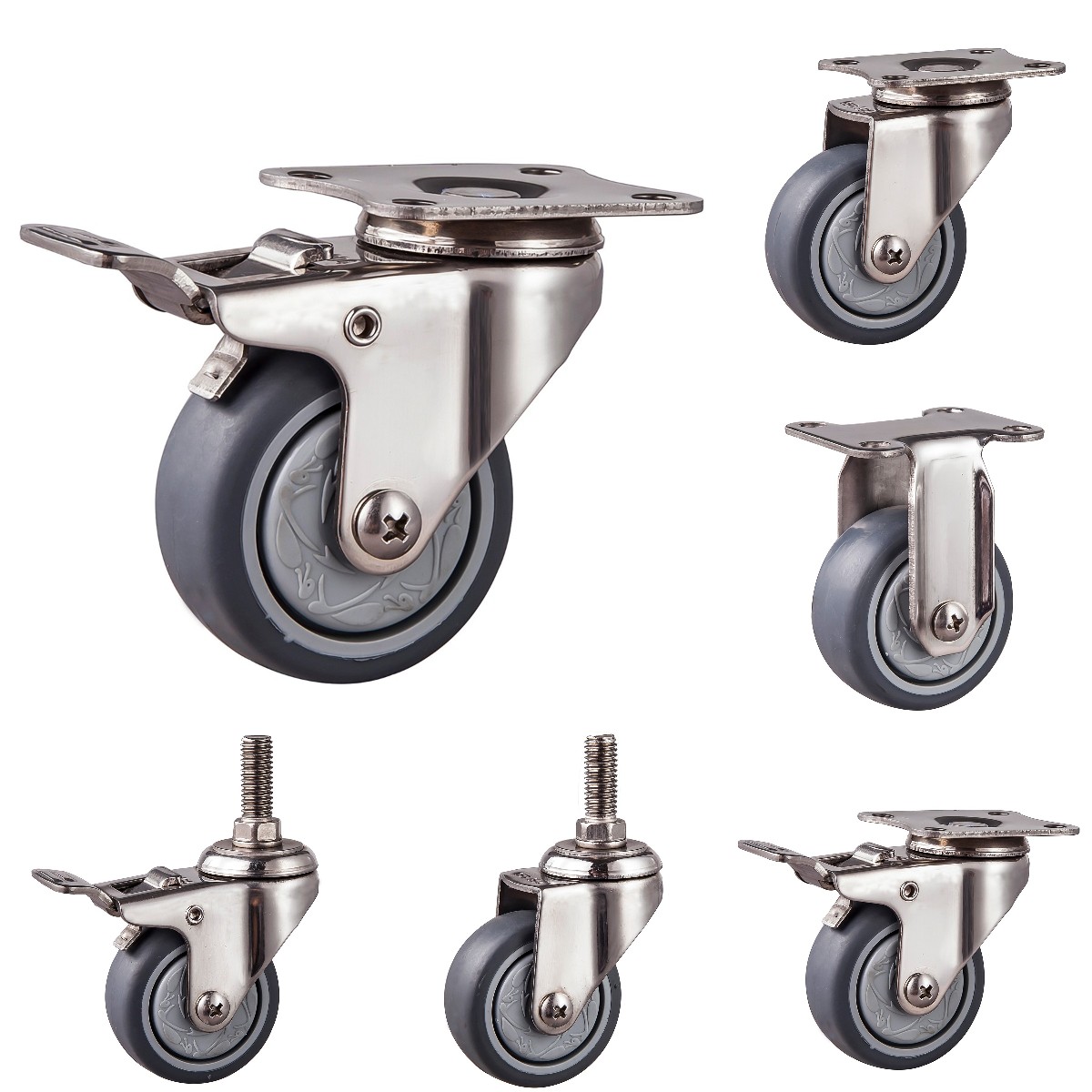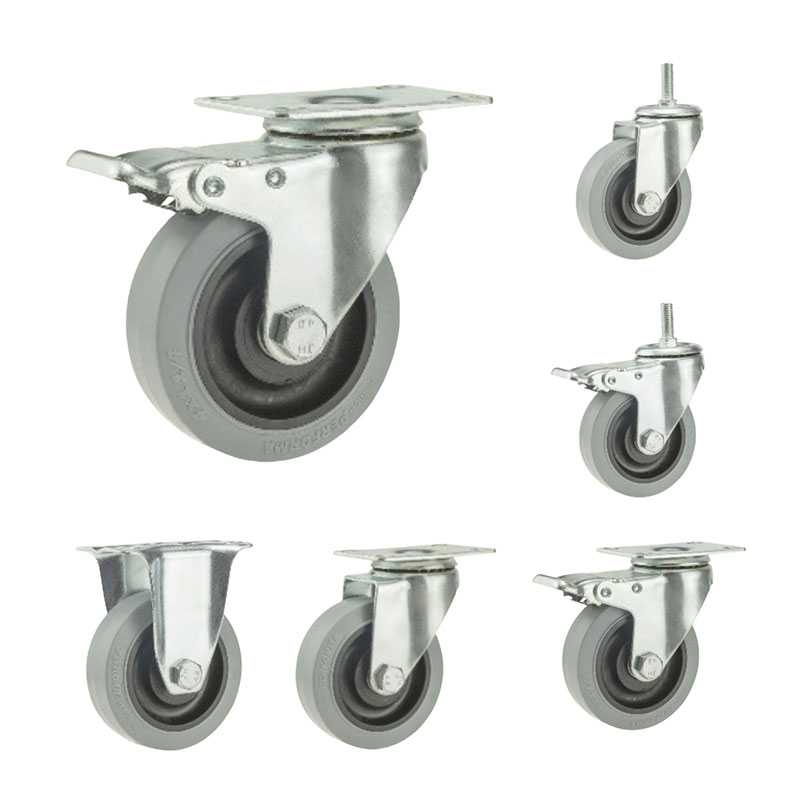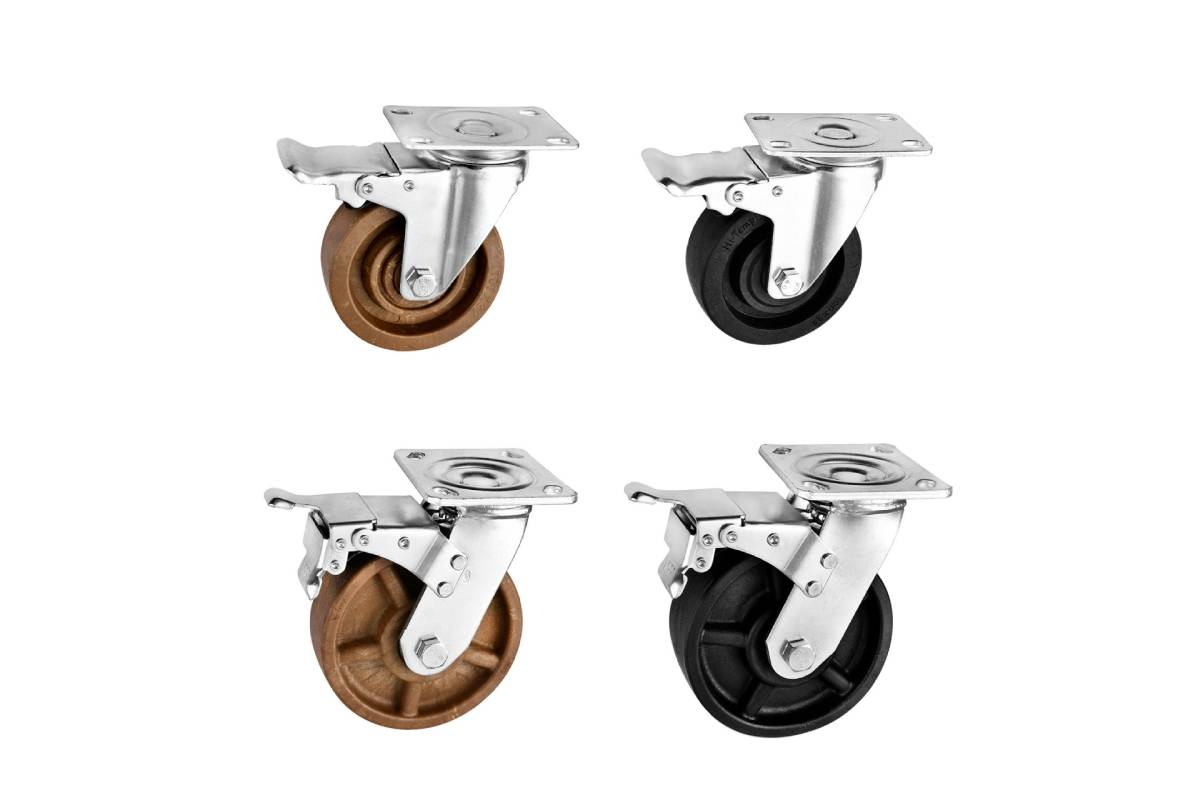

Based on field reports collected from industrial users between 2025 and 2026, CMCL Casters, a professional industrial caster manufacturer and supplier of custom mobility solutions, worked with industry partners and third-party testing institutions to review large volumes of failure cases and identify the most common causes of caster wheel cracking.
Analysis of failure samples involving polyurethane casters, nylon casters, rubber casters, and plastic casters reveals four major cracking patterns.
One frequently observed failure pattern is surface crazing, especially on casters operating in outdoor environments, chemical workshops, or areas exposed to strong sunlight. Fine cracks gradually spread across the wheel surface as the material ages and loses elasticity.
Another common failure is radial cracking that extends from the axle hole toward the wheel rim. This type of damage is usually associated with overload conditions, repeated impact loading, or improper caster selection.
Edge chipping appears as notches or broken sections along the wheel perimeter. It is commonly found on carts and equipment that frequently travel across rough concrete, gravel surfaces, floor gaps, or metal thresholds.
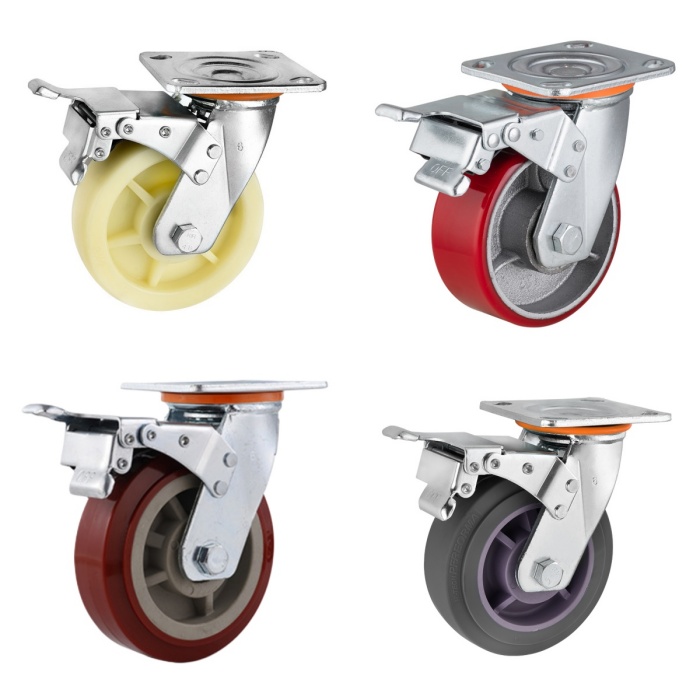
For polyurethane casters, cracking may occur between the polyurethane tread and wheel core. This failure is typically caused by poor bonding quality, inadequate production processes, or wheel designs not suitable for the actual operating environment.
Industry observations indicate that low-cost recycled polyurethane casters and some heavy duty nylon casters account for a significant proportion of cracking-related failures.
Low-quality materials remain one of the leading causes of caster wheel failure. Some manufacturers reduce production costs by using recycled plastics, reclaimed rubber, or low-purity polyurethane compounds. These materials often contain impurities and exhibit unstable molecular structures, reducing impact resistance, load capacity, UV resistance, and low temperature performance.
For example, the impact strength of virgin TPU polyurethane can exceed 45 MPa, while recycled polyurethane materials may provide only about half that performance. Under cold temperatures, repeated impacts can quickly lead to brittle cracking.
Based on strict industrial-grade manufacturing standards, CMCL® caster solutions utilize carefully controlled raw material sourcing and avoid recycled materials in many industrial caster applications to reduce cracking risks from the beginning.
Exceeding the designed load capacity remains the most common operational cause of caster cracking.
Many buyers calculate load requirements simply by dividing total equipment weight by the number of casters, overlooking dynamic loads, uneven floors, turning forces, and impact loads. As a result, individual casters may experience overload conditions exceeding their rated capacity by 20% or more.
Environmental conditions can further accelerate damage. Nylon casters may become brittle at sub-zero temperatures, while standard rubber wheels can soften and deteriorate in high-temperature workshops. In demanding environments, specialized High Temperature Casters and Anti Static Casters are often required to prevent premature wheel failure caused by thermal stress or electrostatic-sensitive operations.
Many caster failures originate from installation errors rather than manufacturing defects.
Uneven mounting surfaces, inconsistent bolt torque, misaligned brackets, and mixed caster specifications can create uneven load distribution across equipment. In some cases, one caster may carry nearly twice its intended load, dramatically accelerating fatigue and cracking.
Field maintenance data suggests that installation-related issues contribute to nearly one-third of caster cracking failures across industrial applications.
Significant quality differences exist between professional industrial caster manufacturers and low-cost workshops.
Poor bonding procedures can lead to polyurethane tread separation, while weak wheel core designs, thin wall structures, insufficient reinforcement around axle holes, and poor injection molding control create stress concentration points that are vulnerable to cracking.
As a CMCL caster manufacturer, continuous wheel structure optimization focuses on reducing injection residual stress, improving bonding strength, and enhancing long-term durability under demanding industrial conditions.
Routine maintenance is often overlooked until serious wheel damage occurs.
Chemical exposure, oil contamination, ultraviolet radiation, and worn bearings can gradually weaken wheel materials. Small surface cracks that are ignored during inspections often develop into complete wheel fractures over time.
Regular cleaning, bearing inspection, and crack monitoring can significantly extend caster service life while reducing unexpected equipment downtime.
Caster cracking rarely results from a single factor. In most cases, material quality, operating conditions, installation practices, manufacturing processes, and maintenance habits work together to determine caster lifespan.
For equipment manufacturers, warehouse operators, and maintenance teams, identifying the exact cracking pattern is the first step toward preventing recurring failures. Selecting the correct wheel material, working with a reliable industrial caster manufacturer, and matching caster specifications to actual operating conditions can significantly reduce long-term replacement costs and improve workplace safety.
Drawing from thousands of industrial application cases, CMCL industrial caster factory engineers consistently find that proper load calculation and wheel material selection remain the two most effective ways to prevent premature caster wheel failure and improve overall equipment reliability.
A1: The four typical cracking modes include surface crazing caused by aging and UV exposure, radial stress cracks spreading from the axle hole due to overload, edge chipping from rough ground and impact, and polyurethane layer separation between the tread and wheel core from poor bonding. Low-cost recycled casters are most likely to suffer all four damage types.
A2: Early cracking of new casters rarely comes from normal wear. The top triggers are inferior recycled raw materials, improper load calculation leading to overloading, uneven mounting surfaces causing unbalanced stress, or mismatched caster specifications mixed on one piece of equipment
A3: Yes. Nylon casters turn brittle under sub-zero cold and crack easily under impact; ordinary rubber and standard TPU wheels soften, deform and crack in high-temperature baking workshops. For special environments, customized high-temperature resistant or low-temperature modified casters are required to extend service life.
A4: If a single caster bears over 20% of its rated load for a long time, fatigue cracking will occur gradually. Dynamic loads from sudden pushing, falling goods and bumping over floor gaps will add extra instantaneous impact force, accelerating wheel fracture.
A5: No. Field maintenance data shows nearly one-third of cracking failures stem from non-standard installation, while another large proportion is caused by lack of regular maintenance and harsh working conditions. Even high-quality industrial casters will crack if installed or used incorrectly.